

Hello world, it’s Thursday, August 13th.
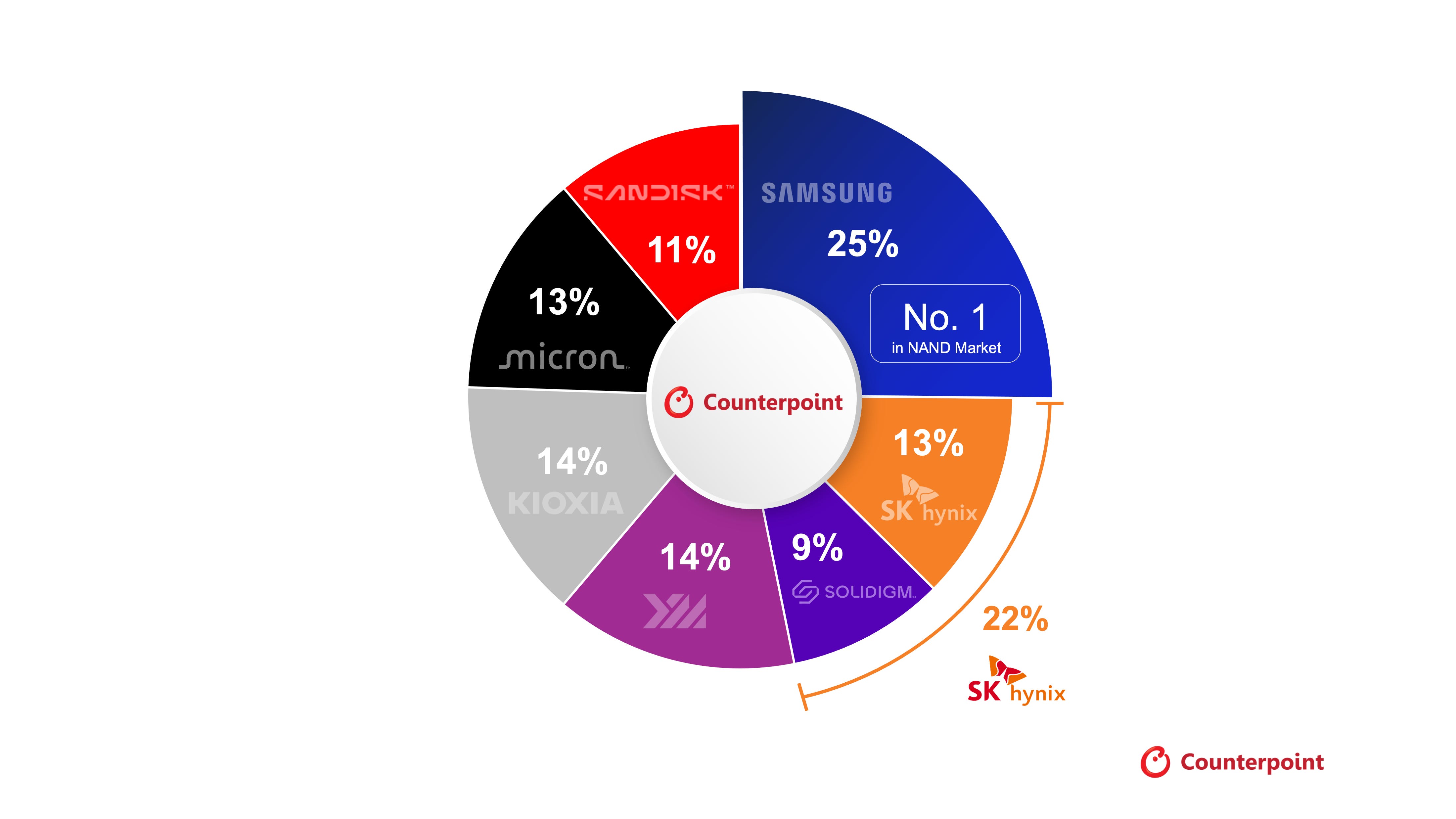
CoreWeave’s revenue backlog hit $104 billion before pulling in another $25 billion in new commitments, cementing the AI infrastructure buildout as very much still in motion. YMTC grabbed third place in global NAND shipments at 14% in Q2, Cisco is projecting $7.5 billion in AI data-center-tied sales. Not a quiet day.
Let’s get into it. — Austin & Vik
Be sure to check out the Semi Doped podcast on YouTube or your favorite podcast player!
CoreWeave and Nebius Earnings Underline AI Infrastructure Supercycle
CoreWeave and Nebius earnings this week point to continued strength in AI infrastructure spending. CoreWeave’s revenue backlog hit $104 billion, with another $25 billion in new commitments added on top. Shares rose roughly 18 percent after the company raised prices 25 percent while near-term capacity stays sold out. The company is also signing A100 contracts running to 2029, keeping six-year-old GPUs in revenue-generating use. On the other side of the ledger, debt has reached $35.6 billion, and the company separately warned that shifting away from Nvidia chips would take significant time and capital.
Nebius reported 514 percent revenue growth year-over-year, with deferred revenue near $6 billion and first-half infrastructure spending above $8.1 billion. Shares rose 34 percent on the results. Super Micro beat on margins and AI-server demand, which Barron’s framed as a recovery in investor confidence after a difficult stretch. The Information reported that both Nebius and CoreWeave are benefiting from rising AI compute prices, with pricing power holding even as capacity grows.
Vik: Those A100’s are still alive and kicking! There was so much debate about GPU depreciation and lifetimes some time ago. If those early NVIDIA chips have contracts running to 2029, imagine how long Blackwells will continue to be useful into the future.
YMTC Grabs Third Place in NAND as Chinese Memory Makers Push Broad Advance
YMTC captured 14% of global NAND shipments in Q2, according to Counterpoint Research, overtaking Kioxia, Micron, and SanDisk to break into the top three for the first time. Samsung and SK Hynix held the first and second positions, per reporting from Chosunbiz. The surge came as AI servers consumed 48% of all flash shipments in the quarter, a demand wave that lifted enterprise SSD volumes and gave YMTC room to climb. Bloomberg reported that YMTC edged out Japan’s Kioxia specifically on shipments in the June quarter, a result the outlet tied to AI-driven supply tightness in the broader market.
CXMT is pressing a parallel attack on DRAM. Chosunbiz reports CXMT is also expanding into mobile DRAM, intensifying its pursuit of Samsung and SK Hynix across another product tier. Two fronts at once is an uncomfortable position for the incumbents.
On a related front:
A venture fund backed by YMTC has taken a stake in SOI Micro, a domestic developer of FD-SOI chipmaking technology, as China builds alternative fabrication ecosystems.
Notebookcheck flagged that YMTC’s top-three ranking carries a caveat: the company remains cut off from the U.S. market under export controls, so its share gains are concentrated in China and select non-Western buyers.
Vik: Breaking up market like this with bits shipped is one thing, but the kind of NAND flash also matters. Kioxia XL-Flash is high IOPS and is well suited for AI applications. Higher performance flash commands a higher ASP, and the revenue balance will change because of that, among these companies.
Cisco and Lenovo Earnings Show AI Spending Reaching Enterprise Hardware
Cisco’s fourth-quarter revenue of $17.3 billion and a full-year forecast projecting $7.5 billion in AI data-center-tied sales together confirmed that enterprise networking demand has moved well past its post-pandemic slump. The $7.5 billion figure drew a cool reception from some investors: Bloomberg reported that Cisco had already accumulated $9.3 billion in AI-related orders over the past year, making the annual target look modest against the backlog. Cisco itself described the demand environment as “broad-based”, and Reuters noted the forecast came in above analyst estimates.
Lenovo, for its part, posted a 43% jump in quarterly revenue, the highest growth rate in five years and the strongest absolute quarter in the company’s history. The surge, driven by what Lenovo calls a hybrid AI strategy, spans both its infrastructure server business and its traditional PC and device lines. Two large, structurally different technology companies reporting simultaneously strong results from AI-related demand, one in networking silicon and one in end-user and server hardware, is the kind of coincidence that stops being a coincidence.
Behind the demand:
Cisco’s Q4 also produced GAAP net income of $3.9 billion, or $0.97 per share, with non-GAAP net income reaching $4.9 billion.
Lenovo flagged the quarter as the strongest in the Group’s history across multiple financial dimensions, not just revenue growth rate.
Cerebras and Cisco Stocks Drop >10% after Failing to Meet Expectations
Cerebras Systems slid roughly 17% in late trading after its results disappointed investors expecting bolder growth from the novel wafer-scale chip designer. The hardware business actually contracted quarter-over-quarter, what Bloomberg characterized as a sign of “lumpy” demand rather than the smooth upward curve the AI trade had priced in. Cerebras did raise its annual targets, citing strong AI chip demand broadly, but the revised guidance still fell short of buy-side expectations for a company competing at the frontier of accelerated computing.
Cisco compounded the unease by projecting $7.5 billion in AI data center sales this fiscal year, a figure that landed poorly given the company had accumulated $9.3 billion in AI-related orders over the past twelve months. Investors had expected that order backlog to translate into a more aggressive revenue forecast. Cisco separately beat its overall sales outlook, citing broad-based record demand, but the AI-specific shortfall pulled focus. Two companies, two different product lines, one shared problem: order momentum and reported revenue aren’t moving in lockstep, and investors are starting to notice the gap.
Sector Watch
Compute
AMD Instinct MI455X deep dive reveals CDNA 5 architecture as backbone of next-generation AI server accelerator lineup. (ServeTheHome)
Nvidia serves Alibaba’s 2.4-trillion-parameter Qwen3.8 model on GB300 NVL72 with Day-0 inference results published. (EE News Europe)
Aehr Test Systems receives a $22 million follow-on production order for wafer-level burn-in systems targeting AI processor customers. (Aehr Test Systems)
Foundry & Packaging
TSMC board approves an additional $29.44 billion in capital spending for advanced processes and packaging as AI demand accelerates. (bloomingbit)
Foxconn reports AI servers now exceed 50% of revenue, with CEO flagging CoWoS packaging as the binding constraint on 2027 AI server supply. (WSJ)
Photronics will report fiscal Q3 2026 earnings on August 26 before market open. (Photronics)
Memory
Rambus announces HBM4E memory controller IP reaching up to 16 Gbps per pin, targeting next-generation AI accelerator bandwidth. (TechPowerUp)
Meta cuts server count 25% by deploying CXL-based memory expansion reusing decommissioned DDR4 modules across millions of servers.
FADU secures 10 billion won in short-term financing to support surging enterprise SSD customer demand. (The Elec)
Optics & Networking
Fujikura raises its full-year outlook as AI-driven fiber demand continues to build across data center interconnect markets. (Fujikura)
Prysmian commits $1.25 billion to double its US fiber manufacturing footprint to meet surging connectivity demand. (Fierce Network)
Tenstorrent posts GCC compiler patches for its Ascalon XG core, advancing open software support for its RISC-V AI processor platform. (Phoronix)
Policy & Trade
US launches initiative to accelerate trade in AI goods between allied nations, targeting supply chain alignment and export coordination. (Bloomberg)
Anthropic investors price the company at a $2 trillion valuation ahead of what would be a record IPO, per Financial Times reporting. (Financial Times)
Tencent reports Q2 revenue beating estimates while CapEx jumps 176% on AI infrastructure push, with shares under pressure on cost-escalation concerns (SCMP)