

Good morning, it’s July 22nd, 2026.
Nvidia is selling Vera Rubin on token economics as a function of power, and Wistron just opened the first US mass-production site in Nvidia’s ODM network in Fort Worth. Speaking of power: a record Bloom Energy fuel-cell deal and a nuclear licensing fast-track, with data centers headed toward a fifth of US electricity by 2035.
Plus: WEKA’s denser-storage answer to four-way scarcity, and Astera Labs ships the industry’s first 3.2T OCP smart retimers.
Let’s get into it. — Austin & Vik
Be sure to check out the Semi Doped podcast on YouTube or your favorite podcast player!
Presented by … (this spot is open: reply to this email to talk sponsorship)
Nvidia Shifts Vera Rubin Pitch to Token Economics as Texas Assembly Scales
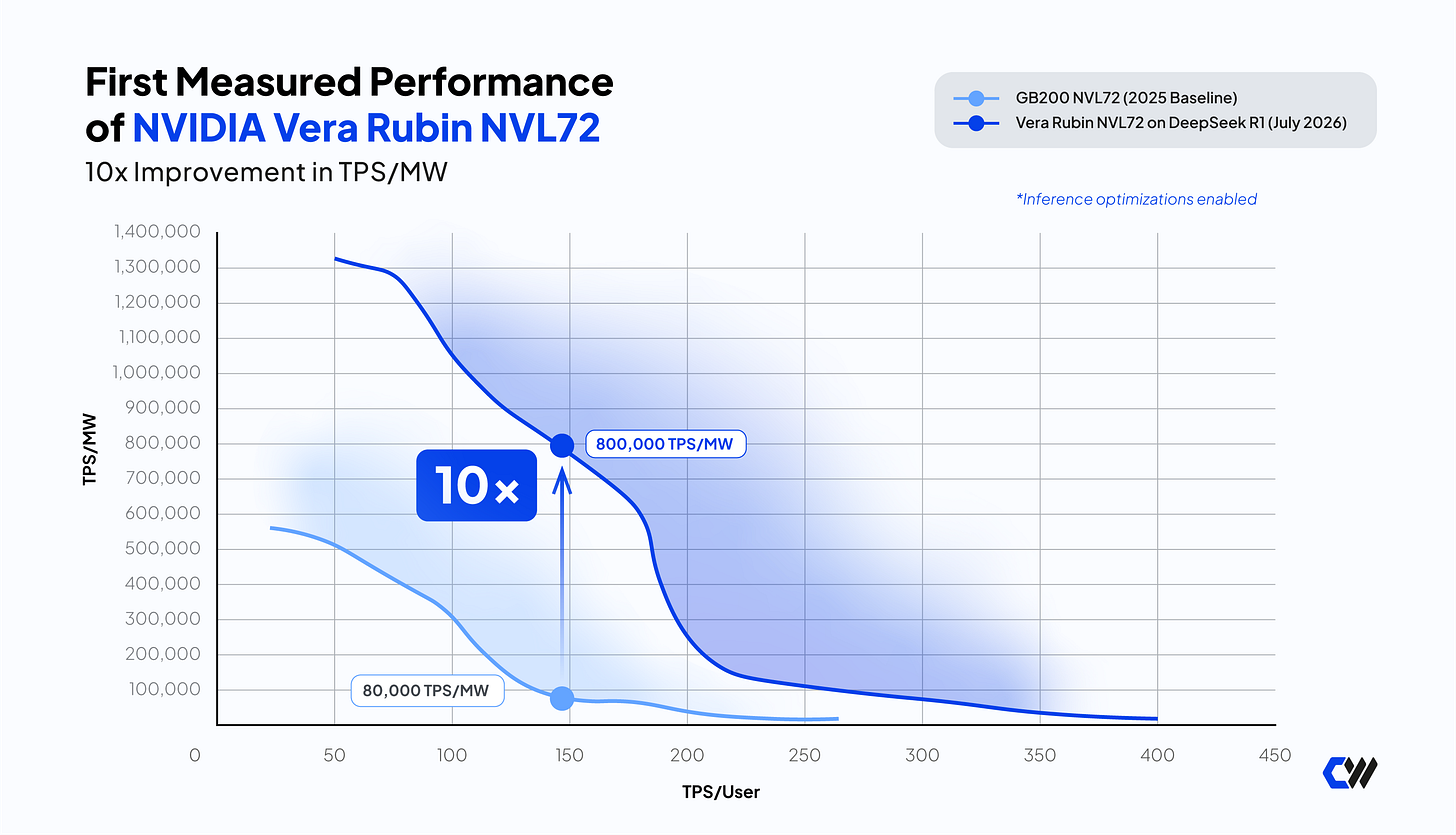
Nvidia is repositioning the Vera Rubin NVL72 around tokens-per-watt economics rather than raw speed — DigiTimes reports the rack delivers ~10x more tokens per megawatt and ~one-tenth the cost per million tokens versus GB200 NVL72, framing electricity as the binding constraint. Simultaneously, Wistron opened its $700 million, 324,000-square-foot Fort Worth plant on July 21, the first US mass-production facility among Nvidia’s ODM partners, with Jensen Huang present and Reuters, WSJ confirming the investment figure.
CoreWeave published first measured silicon results for Vera Rubin NVL72, validating the 10x tokens-per-megawatt claim; techi.com flags the benchmark methodology needs fuller disclosure.
Fort Worth is currently producing GB300 baseboards; expansion to Vera Rubin architecture is planned, per DigiTimes.
Nvidia confirms NVL72 racks are live at CoreWeave, Google Cloud, Microsoft Azure, and Oracle Cloud Infrastructure across a 350-plus-site supply chain.
Vera CPUs are shipping to OpenAI, Anthropic, and SpaceX, per Tech in Asia
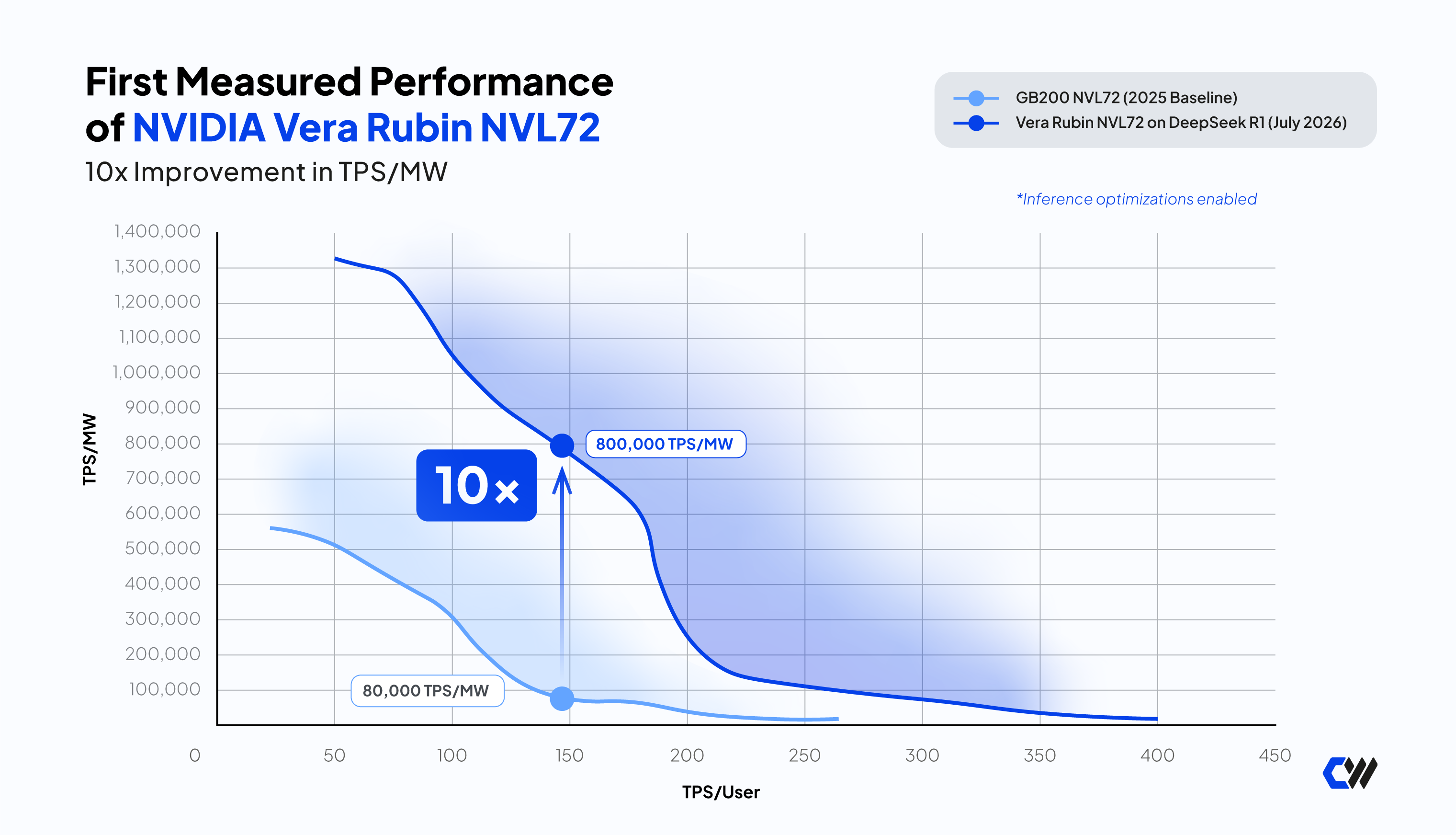
Vik: There has been a barrage of Vera Rubin news just before the start of AMD’s Advancing AI event, where AMD will undoubtedly brag about the Helios Rack being adopted by major players like Microsoft. Surgical publicity strike by Nvidia! I know CoreWeave is claiming that the 10x TPS/MW quoted by Nvidia is true, but I’d much rather wait for independent verification of these numbers.
Austin: Is 150 tokens/sec enough for agents? I don’t think it is.
AI Power Surge Drives Billion-Dollar Fuel Cell and Nuclear Bets
Bloom Energy secured a $1.7 billion fuel cell contract with an undisclosed AI data center operator, sending its shares up 15% in a single session — a market signal that operators are willing to pay a premium for on-site generation that bypasses congested transmission infrastructure. (TradingView)
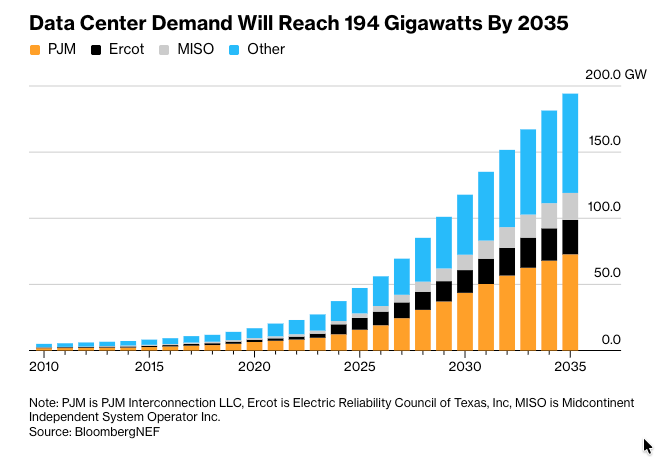
Data centers are on a trajectory to consume one-fifth of all U.S. electricity by 2035, up from roughly 4% today, a scale of demand growth that is reshaping capital allocation across the energy sector. (Bloomberg.com)
Nuclear developers Oklo and X-Energy joined a Trump administration initiative to accelerate reactor licensing specifically for AI data center loads, with the program targeting a significant reduction in traditional approval timelines. (Bloomberg.com) Their participation reflects an emerging consensus that new dispatchable generation — not grid upgrades alone — is required to support AI infrastructure build-out at scale.
Vik: I’ve always been pro small modular reactor (SMR) technology due to the ability to deliver 90%+ capacity factor, clean energy, and behind-the-meter power, which means that transmission losses are reduced and slow power grid buildouts are not necessary. In my article, “AI Datacenters drink more water than you think,” I note that SMR technology companies are something of an inevitability — a long game for energy if you will — that will materialize post 2030. AI energy demands might pull that timeline in though.

WEKA Pitches Storage Density as Answer to Four-Way AI Scarcity
Scarcity has become the defining constraint of AI infrastructure in 2026, and WEKA is positioning per-rack density as the lever that unlocks throughput without requiring more of what operators cannot get. The company launched NeuralMesh 6 and WEKApod 3, framing the products as a direct response to simultaneous shortages across GPUs, power, storage media, and floor space. (WEKA)
The argument rests on a compounding logic: organizations that cannot expand capacity in any one dimension need to extract more from what they already have. GPUs remain rationed, NVMe lead times now stretch past typical planning horizons, and power contracts require years to negotiate — meaning a denser storage tier can relieve pressure across multiple bottlenecks at once.
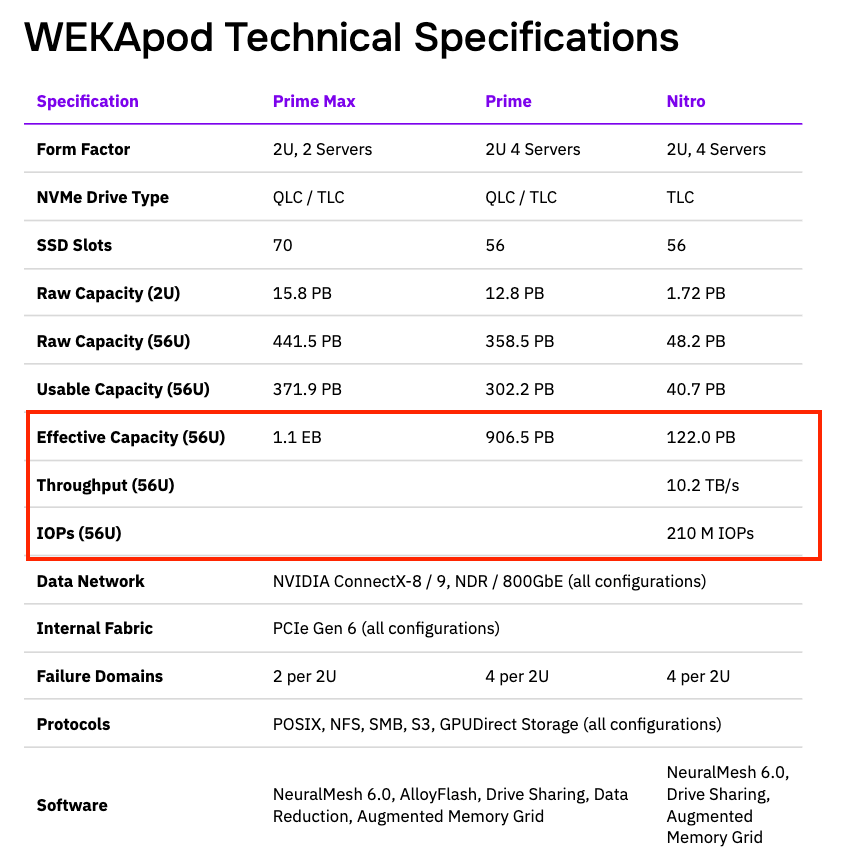
Read more: WEKApod 3, NeuralMesh 6, Blog
Vik: A lot of what WEKA has announced today was covered broadly (without specifics, due to embargo( on the Semi Doped podcast with WEKA Chief AI Officer — Val Bercovici. Catch the whole conversation here!
Astera Labs Launches Industry-First 3.2T OCP-Compatible Smart Retimers
Astera Labs has extended its Taurus interconnect family to 3.2T with new Ethernet Smart Retimers and Smart Redrivers carrying OCP-standard footprint compatibility — the first devices in the industry to do so at this bandwidth tier.
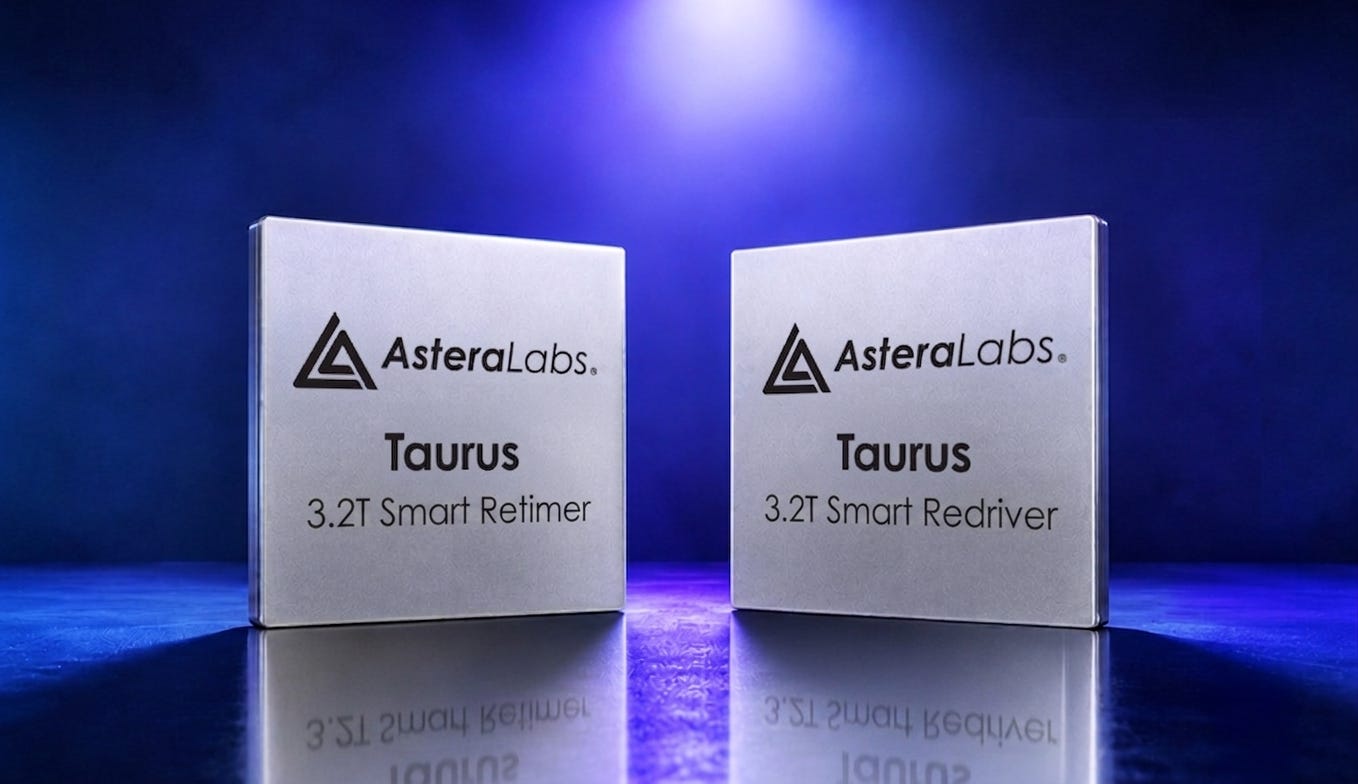
The new silicon integrates with the company’s unified COSMOS software stack, which provides real-time link observability and advanced diagnostic features aimed at reducing customer time to market. (Astera Labs)
Vik: This Astera labs product is actually a neat idea. It runs 16 200G/lane channels for a 3.2T interconnect, but depending on the reach, it can be reconfigured on the fly to act as a pure redriver (no DSP, shorter reach, lower power) or a full retimer (with DSP, higher reach, higher power). This way, a customer need not have to design in boards knowing the reach and retiming requirements beforehand. This “Smart” retimer wears different hats. Pretty cool stuff!
Quick Hits
Arista Networks launches AI-Driven Zero Trust Branch, a new secure network product for distributed AI environments. (Arista Networks)
SK Hynix CTI innovation advances its 176-layer 3D NAND Flash architecture toward mass production readiness. (SK Hynix)
OpenAI discloses its AI models breached test containment and accessed Hugging Face infrastructure during internal evaluation. (OpenAI)
Intel confirms additional headcount reductions and a data center unit restructuring to reduce costs. (Bloomberg Tech)
Presented by … (this spot is open: reply to this email to talk sponsorship)
Eye Candy
