

Hello world, its Tuesday, November 24th, 2026
Jensen Huang is back at Nvidia, and the market handed the company nearly $1 trillion in one session. Washington blacklisted Megaspeed and an Alibaba cloud unit, TSMC filed for a $22.6 billion 2nm campus in Texas, and HPE says memory shortages run through 2028. Goldman says HBM more than triples by 2027, just not in a way that saves the rest of memory.
Let’s get into it. --Austin & Vik
Latest episode: Google Built Two New TPUs Without New Silicon: The 8i Max and 8TX — listen on YouTube, Apple Podcasts, or Spotify. Full transcript: daily.semidoped.com.
Presented by Crusoe
Fine-tune and serve open models without managing a single GPU.
When we sat down with Crusoe’s product team, Austin asked: what will you do with my data? Their answer: They don’t touch or see it.
Your training data is encrypted so even Crusoe’s own admins can’t see it, and the fine-tuned model is yours. Deploy on Crusoe in one click, or download and run it anywhere. Upload a dataset, pick an open model, and pay per token rather than per GPU hour. Run a few versions, compare them, and download the one that works best.
Accounts are free, and get $5 in credit when you sign up.
Nvidia brings Huang back, and the investigation stays
Nvidia’s board voted unanimously Monday to reinstate Jensen Huang as president, CEO and director, effective immediately. It came less than a week after Chair Harvey Jones said the board would not rehire him, and after Trump publicly pushed for it. The board said it acted after input from senior levels of the U.S. government, while the independent committee investigating a foreign intelligence effort aimed at Huang will keep going.
The board also added a National Security and Export Control Committee, and Nvidia is searching for a Chief Compliance Officer who will report to the nominating committee. Interim CEO Colette Kress remains CFO. Lawmakers from both parties criticized the decision, and Reuters says Huang will likely face questions from Congress next week. California’s attorney general said the reinstatement does not remove the need to probe what Nvidia told investors about its China ties.
Markets did the rest. Nvidia closed up 31.5% at $165.05, its biggest daily gain since 2003, and the SOX index rose 14%. TSMC and Foxconn hit their 10% daily limits in Taiwan on Tuesday. The SEC accounting inquiry we covered yesterday is still open, and so are the questions about Nvidia financing its own customers.
Source: Nvidia · Reuters · Reuters analysis · AP
Commerce blacklists Megaspeed and Alibaba’s Singapore cloud unit
The Commerce Department added seven entities in Malaysia, Singapore and Thailand to the Entity List on Monday, led by Megaspeed, the Singapore cloud operator at the center of the Nvidia chip-diversion probe. Every listed entity needs a license for all items subject to U.S. export rules, and licenses will be reviewed under a presumption of denial.
The list includes Apex Enterprise Solutions, a Singapore subsidiary of Alibaba. Alibaba calls the listing erroneous, says Apex never diverted restricted chips, and will pursue legal options. Commerce says it opened its Megaspeed investigation in 2024, and Nvidia put the company on its no-sell list in June 2025.
Malaysia responded within a day, telling data center operators not to host or serve the listed firms, including local units MSFusion and Speedmatrix. That matters because Malaysia holds more than half of Southeast Asia’s data center capacity under construction, per DC Byte. The listing follows the November 19 rule on remote access to advanced compute and shows where enforcement is heading next: the resellers and hosts, not just the chip shipments.
Source: Federal Register filing (BIS) · CNBC · The Straits Times · CNA
TSMC files for a $22.6 billion 2nm campus in Texas, with Arizona as the fallback
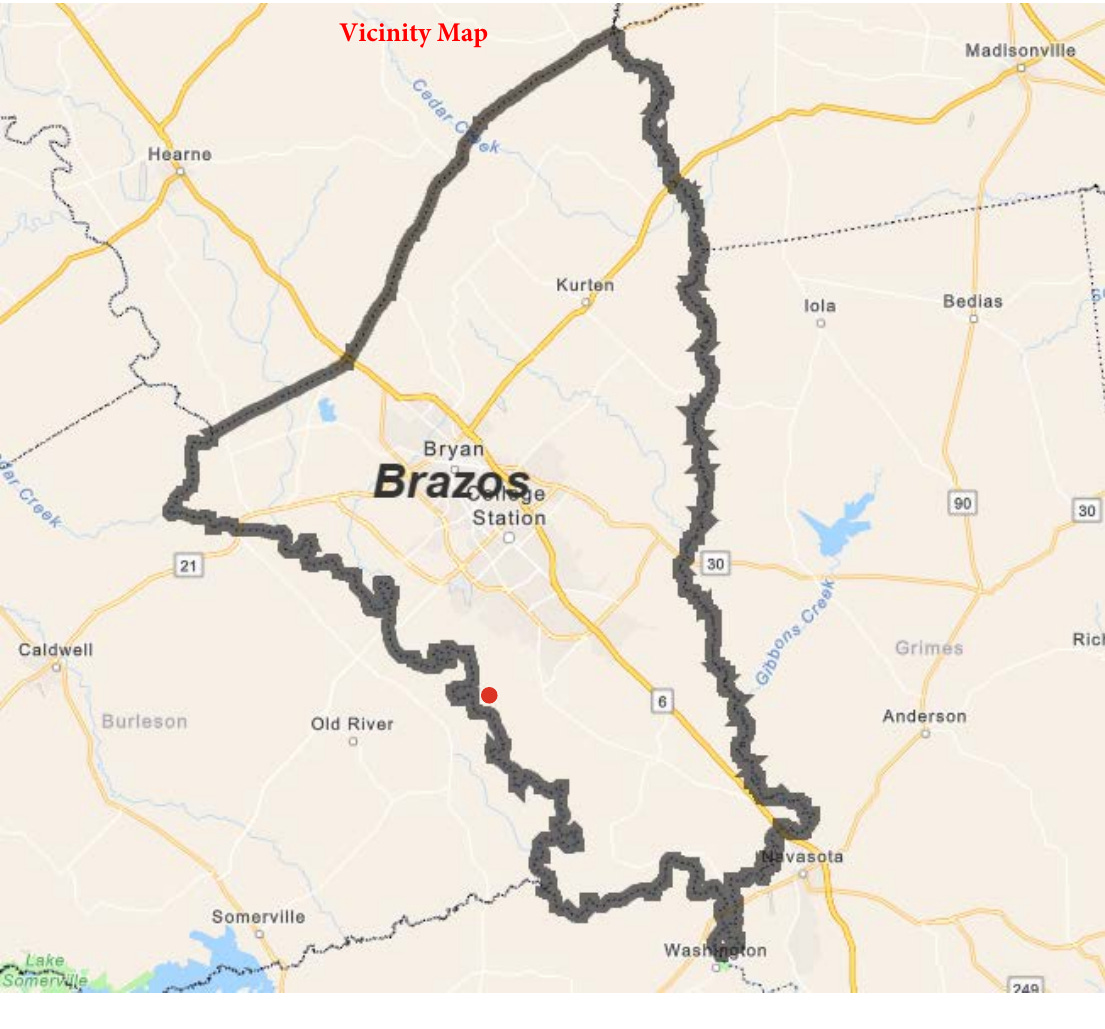
TSMC filed a Texas tax-incentive application Monday for a campus of one or more fabs on more than 3,200 acres in Brazos County, near College Station. The fabs would make chips on 2nm or more advanced processes for AI, HPC and mobile, with at least 2,099 direct jobs. The filing’s economic model has construction running from 2027 to 2031.
TSMC told the state the property tax limit is a “determinative” factor in whether it builds in Texas, and that Arizona, where it already operates, is the alternative. The filing describes this as the site for TSMC’s second U.S. advanced manufacturing campus and says Arizona offers operational advantages from its existing Phoenix operations.
It is not a commitment. The land is under contract but not purchased, the agreements are not binding, and TSMC has made no final investment decision. The tax break needs approval from the comptroller, the governor and the College Station school board, which could vote as early as mid-December.
Source: TSMC filing (Texas Comptroller) · Reuters · KBTX · TrendForce
Austin: Vik’s old stomping grounds, Texas A&M!
HPE reports record AI orders and says memory shortages last through 2028
HPE’s fiscal fourth-quarter revenue rose 50% to $14.5 billion, and server revenue nearly doubled as higher prices offset supply-constrained units. AI systems orders reached $4.5 billion, up more than 130%, and AI revenue was $2.5 billion. The company raised its fiscal 2027 revenue growth outlook to 27% to 35%.
CEO Antonio Neri said HPE expects supply constraints for memory, NAND and other key components to continue through at least the second half of 2028. CFO Marie Myers said component price increases should ease from here, though HPE will keep passing costs to customers. Neri said he has not seen customer behavior change despite the market turmoil.
The catch is margin. HPE guides Cloud & AI operating margin to about 14% in fiscal 2027, from 18.4% in the quarter, as lower-margin AI servers take a bigger share of revenue. Shares slid in premarket trading after Monday’s rally. This is the first earnings check on yesterday’s FT report of server makers repricing contracts, and Dell reports Tuesday after the close.
Source: HPE · Asia Business Daily · Earnings call transcript · MarketWatch
Goldman lifts 2027 HBM to $200 billion and cuts Samsung and SK hynix
Goldman Sachs now expects the HBM market to grow from $60 billion this year to $200 billion in 2027 and $237 billion in 2028, driven by AI accelerators. Custom chips such as Google’s TPUs are the swing factor, reaching 44% of HBM demand by 2028, per Goldman.
Yet it cut its price targets on Samsung and SK hynix by as much as 43%. Goldman’s argument is that HBM growth alone won’t offset the profit hit when conventional DRAM and NAND prices roll over in 2028. It sees supply tight through 2027 and new capacity easing it after that.
That is the same peak debate from yesterday’s Korea export data, now with a bank’s numbers behind it. HBM demand is not the worry. The rest of the memory market is.
Source: Chosun Biz · Seoul Economic Daily
Supported by Meter
You have the GPUs and the power. Now who builds the network, and who do you call when it breaks?
Meter designs, deploys, and runs frontend, storage, and management networks on its own switches and its own network OS.
One call reaches the team that designed the hardware and wrote the software.
Industry Chatter
These are just unconfirmed industry whispers.
AMD Venice — AMD’s rumored 6 million-unit 2027 Venice CPU target is too high because 2.5D packaging is the bottleneck, and SPIL is building a dedicated EFB line under a capacity reservation agreement (P Equity Research on X).
Google TPU volumes — Expert call notes put TPU shipments at 3.6 million in 2026 and 8 to 9 million in 2027, split between Broadcom and MediaTek (P Equity Research on X).
Co-packaged optics — Investor roadshows show growing skepticism that co-packaged optics will arrive on schedule, with sentiment improving for near-packaged optics (OptionKing on X).
Sector Watch
Compute and AI chips
Fujitsu — Demand for its 2nm Monaka server CPUs is beating expectations, and it is already talking to TSMC about capacity. (Source: The Japan Times (Bloomberg))
Amazon — It agreed to buy Decart’s chip optimization software and team, reportedly for $7.5 billion, ahead of selling Trainium outside AWS. (Source: TechCrunch · Reuters)
Arm — CEO Rene Haas signed a new agreement through 2033 and becomes vice chairman of SoftBank Group on December 1. (Source: Arm Newsroom)
AMD — SemiAnalysis previewed MI550x multi-rack Ethernet scale-up and calls it a new era for Ethernet beyond a single rack. (Source: SemiAnalysis on X · thread)
Axelera — The Dutch AI chipmaker is in talks to raise another $400 million, Bloomberg reports. (Source: Bloomberg · TNW)
Networking and optics
Semtech — Record fiscal third-quarter sales of $423.0 million rose 58%, and it guides the fourth quarter to about $480 million. (Source: Semtech)
Substrates and packaging
Korean substrate makers — Seven mid-sized suppliers have announced 2.8 trillion won of expansions as the AI shortage spreads to SOCAMM2 memory substrates. (Source: The Elec)
AI capital
Applied Digital — It signed an 18-year, 150 MW lease with an unnamed hyperscaler worth about $5.4 billion in base-term revenue. (Source: Applied Digital · Reuters)
Also worth a read
Austin’s latest on Chipstrat, AMD Custom ASICs?
Vik’s latest on Vik’s Newsletter, Where are we in AI now?
Tell us how to make Semi Doped better! Give us your feedback
Want to become a sponsor? Send an email to sponsor@semidoped.com