Broadcom seals $63B XPU deal for Anthropic, SK Hynix unveils $75B return plan, CXMT starts HBM3E output at 20-30% yield, Oracle adds Google TPUs and Cerebras to OCI.
Broadcom’s Hock Tan personally closed a $63 billion XPU financing for Anthropic, with an SPV buying the chips, leasing them back, and Broadcom guaranteeing residual values. Elsewhere, SK Hynix posted a record quarter and a $75 billion shareholder return plan, CXMT is starting HBM3E output at 20 to 30 percent yields, and Oracle added Google TPUs, Cerebras, and SambaNova to OCI.
Let’s get into it. — Austin & Vik
Quick hits, high signal. Takes from semi industry experts. Sign up for free daily updates!
Be sure to check out the Semi Doped podcast on YouTube or your favorite podcast player!
Presented by Crusoe
Crusoe builds the full stack for AI, from power and data centers to the cloud. It can also help you tune a small model on your own data for just a few bucks.
For repeatable work like reports, an open model trained on your terminology and formats can match a frontier model, and it’s cheaper and faster to run.
Crusoe’s Serverless Fine-Tuning handles the training: upload your dataset, pick an open model like Llama, DeepSeek, or GLM, and pay per million tokens used, not per GPU hour.
About $2 buys roughly 5M training tokens on smaller models.
Deploy on Crusoe Cloud in one click or download the weights and deploy on your own.
Broadcom CEO Seals $63 Billion XPU Deal to Back Anthropic IPO
Hock Tan personally intervened to close a financing structure worth $63 billion in which Broadcom will supply XPUs and AI equipment to Anthropic through a special purpose vehicle funded by global financial institutions, which will purchase the chips and lease them back to Anthropic. Banks are now eyeing roughly $21 billion in bonds tied to the arrangement. The deal converts what Anthropic’s S-1 listed as a compute-dependency risk into a bond-backed hardware commitment, with Broadcom guaranteeing chip residual values as collateral. Anthropic already carried minimum computing infrastructure payment obligations of $417 billion at end-2025, and Digitimes reports that Anthropic’s surging ASIC demand favors Broadcom over rivals including MediaTek, cementing its position as the primary custom-silicon beneficiary of the AI company’s IPO-era expansion.
Austin:Hock is in a different position than Jensen. Nvidia is a merchant silicon vendor, Broadcom an XPU and networking partner. Both have great balance sheets, but the residual-value guarantee highlights that a GPU is real collateral because it has a resale market, while a custom XPU is too… but probably has significantly fewer buyers. Yes I think the big dogs would buy up the TPUs, but that’s still a handful of potential customers. If things go south, which I don’t expect, I’d rather be in Jensen’s shoes.
SK Hynix Posts Record Profit, Unveils $75 Billion Shareholder Return Plan
SK Hynix announced a $75 billion shareholder return program alongside third-quarter results that set a new company profit record, with HBM chip demand from AI infrastructure customers driving the headline numbers. The capital return plan, partly funded by gains on the company’s Kioxia stake, dwarfs anything the Korean memory sector has attempted before. Bloomberg reported a $45 billion payout figure, suggesting some variation in how the total commitment is being parsed across time horizons. SK Hynix shares jumped roughly 9-10% in Seoul trading on the news, pulling Samsung up with them. Even so, Bloomberg noted that memory equities broadly have struggled to hold post-earnings gains, with investors weighing near-term cycle risks against the company’s evident confidence in durable AI-driven demand.
CXMT Starts HBM3E Output at Yields as Low as 20 Percent
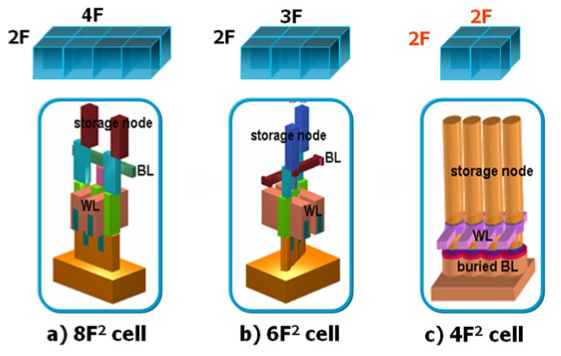
Reuters, citing sources familiar with the matter, reports that CXMT will proceed with limited HBM3E production despite yields running at only 20 to 30 percent, a fraction of the 60-plus percent typically required for profitable volume manufacturing. The Hefei-based DRAM maker is pressing ahead partly because U.S. export controls have cut off access to leading-edge equipment, leaving it with few paths to advanced AI memory other than tolerating punishing defect rates for now. Digitimes reports a parallel technology contest taking shape: while CXMT pursues a 4F² cell architecture to squeeze density from older lithography, SK Hynix is doubling down on EUV-extended 6F² designs to defend its lead. The divergence matters because it reflects two genuinely different bets on how next-generation DRAM scaling gets done without the other side’s tooling.
Vik: 20-30% HBM3E yield? Wow that’s terrible. Anyway, if you want to learn about 4F2 cell architecture, read my Substack post.
Austin: Some perspective: Samsung needed a redesign and most of 2025 to get 12-high HBM3E through Nvidia’s qual, with every tool it wanted. A 20 to 30 percent yield with no leading-edge equipment is less embarrassing than the headline makes it sound. BUT it’s not clear to me the stack height. 8 high or 12 high?
Oracle Loads OCI With Google TPUs, Cerebras and SambaNova Chips
Oracle announced deals to bring Google TPUs, Cerebras wafer-scale systems, and SambaNova inference hardware onto OCI, all three partnerships arriving in a single cycle alongside an expanded Nvidia Vera Rubin commitment. Cerebras and SambaNova services are both targeted for 2027, with Cerebras shares jumping roughly 10% on news of the deal. Google’s TPU availability on OCI is also set for 2027, per reporting from Data Center Dynamics. Reuters frames the push as a deliberate effort to cut Nvidia dependence. OpenAI is separately weighing purchases of Google TPU chips to supplement its own Nvidia supply, according to Bloomberg. Oracle’s move adds three distinct accelerator architectures to its catalog inside a single announcement window.
Austin: Oracle is the one hyperscaler already living inside its rivals’ clouds, Database@Azure, @Google Cloud, and @AWS, so hosting Google’s TPUs fits. Can you picture AWS racking TPUs next to Trainium? With no in-house accelerator, OCI gets to sell whatever the customer wants. Startup Positron also recently announced it’s Atlas offering is available at OCI too.
Vik: That’s some swell news for SambaNova (and Intel, because CPUs)! I have a whole deep dive on SambaNova. They even sponsored a few episodes of my newsletter!
ASM International Pulls 2030 Revenue Target Forward to 2027
ASM International beat third-quarter expectations and issued Q4 sales guidance above analyst consensus, sending a clear signal that atomic-layer deposition tools are selling faster than the company’s own roadmap anticipated. The acceleration is real: management raised its 2027 revenue target by roughly 24%, effectively achieving its 2030 goal three years early on the back of AI-driven fab investment and surging demand for gate-all-around and advanced-packaging processes. The revised 2027 target puts ASM on a trajectory Yole Group’s analysts would recognize, given their projection that wafer fab equipment revenues will climb from $129 billion in 2025 toward $220 billion by 2031. Specialized tool makers with deep process expertise are proving far harder to substitute than commodity equipment suppliers.
Samsung Electro-Mechanics Posts Record Q3 Profit on AI Component Demand
Samsung Electro-Mechanics reported third-quarter operating profit that soared 165% year-on-year, a record for any quarter, as demand from AI server builders lifted both its multilayer ceramic capacitor and ABF substrate businesses simultaneously. The company told investors it expects AI-related MLCC demand to grow eightfold by 2027, a figure that puts passive components squarely in the conversation about AI infrastructure bottlenecks. Revenue from ABF substrates, which carry chip packages in high-end servers, accelerated enough to give the company a second pricing lever beyond MLCCs. Samsung Electro-Mechanics has said 2027 is now its next target for a fresh quarterly record, with AI server builds the assumed engine. The passive-component supplier isn’t waiting for that ceiling to arrive.
Vik:The company stands at the intersection of two of the greatest AI bottlenecks today — MLCCs and substrates. Go figure!
Sector Watch
Compute
AMD and Meta advance a strategic partnership to power Meta’s superintelligence infrastructure, with AMD committing $1 billion to Meta’s share sale and receiving warrants for up to 160 million shares. (AMD)
Anduril and Qualcomm launch the BlueChip venture to build US-assembled rugged laptops on Snapdragon X chips, targeting a 90% domestic supply chain. (Bloomberg.com)
Power
HD Hyundai Electric will invest an additional 198 billion won in its Cheongju power distribution campus to meet surging grid and data-center demand. (The Elec)
Eaton expands its Austria plant ahead of Q3 results, positioning to serve growing data-center and industrial power markets in Europe. (Eaton)
PCB & Components
Doosan will invest 399.2 billion won to build dedicated CCL production lines in Gimje for optical-module applications serving AI data centers. (The Elec)
Simmtech accelerates SOCAMM substrate investment as BT substrate supply tightens amid rising AI server memory module demand. (digitimes)
UMC and AP Memory jointly advance silicon capacitor technology for AI power delivery, targeting tighter voltage regulation in next-generation accelerator platforms. (EE Times Asia)
Optics & Networking
Nebius Group secures France data-center funding, posting Q2 revenue up 454% year-on-year as it scales its AI cloud footprint across Europe. (StreetInsider)
imec publishes a scaling roadmap for optical interconnects targeting the AI era, addressing bandwidth and energy-per-bit limits beyond current co-packaged optics approaches. (Semiconductor Engineering)
Policy & Trade
Malaysian customs seized AI chips worth $12.1 million at an airport, the largest single interdiction yet under tightened export-control enforcement in Southeast Asia. (Reuters)
France says rare-earths diversification away from China is achievable within three to five years, as the minerals envoy outlines a concrete supply-chain transition timeline. (Reuters)
Microsoft publicly demos its Maia 300 AI accelerator at OCP 2026, the first detailed hardware showing of the chip designed to reduce Azure’s dependence on Nvidia. (ServeTheHome)