Positron AI raises $875M at a $5B valuation, Ayar Labs hits $650M in 2026 funding as Wiwynn invests, Oracle OCI up 121% with a $664B backlog, Pentagon weighs $5B loan to Fluidstack.
Investors put more than $1.5 billion behind the inference build-out in a single day. Positron AI closed an $875 million round at a $5 billion valuation to bring its inference silicon to market, and Ayar Labs added $150 million, with ODM Wiwynn joining as a strategic investor, to reach $650 million raised in 2026. Elsewhere, Oracle’s cloud infrastructure revenue grew 121% as its backlog surged to $664 billion, Microsoft is targeting 38 gigawatts of data center capacity by 2032, and the Pentagon is weighing a $5 billion direct loan to AI cloud startup Fluidstack.
Let’s get into it. —Austin & Vik
Quick hits, high signal. Takes from semi industry experts. Sign up for free daily updates!
Be sure to check out the Semi Doped podcast on YouTube or your favorite podcast player!
Oracle Cloud Infrastructure Revenue Doubles as Backlog Surges to $664 Billion
Oracle’s first quarter of fiscal 2027 turned in total revenue of $19.3 billion, up 30% year-over-year, with OCI growing 121% to pace every other segment in the portfolio. The remaining performance obligation, a measure of contracted future revenue, reached $664 billion, a record that reflects multi-year capacity commitments from cloud and AI customers. Oracle delivered 300,000 GPUs in the quarter, a single-period figure that ranks among the largest disclosed GPU deployments by any infrastructure provider. To fund continued build-out, the company raised $20 billion in fresh capital, adding to a debt load already climbing alongside its construction pipeline. Management issued full-year revenue guidance of approximately $90 billion and raised its full-year EPS outlook. Shares climbed roughly 7% on the results.
Austin:Delivered 300K GPUs in a single quarter!? There used to be some debate as to whether OCI should be considered a hyperscaler cloud like AWS/GCP/Azure or if it’s more akin to a large neocloud. Clearly the former.
Vik: To produce $664B worth of products and satisfy multiyear capacity commitments, we need a continuous supply chain that doesn’t bottleneck across the entire landscape. What kills the golden goose is often what you least suspect: a substrate or a specific capacitor type that is only made by a single player who refuses to expand capacity fast enough.
Positron AI and Ayar Labs Pull in Over $1.5B for Inference Silicon
Positron AI closed an $875 million round at a $5 billion valuation to commercialize its next-generation inference silicon, one of the larger single raises in the accelerator space this cycle. Ayar Labs, which makes co-packaged optics for high-bandwidth chip interconnects, reached $650 million in total 2026 funding after adding $150 million in fresh capital, with Taiwanese ODM Wiwynn joining as a new strategic investor. The two rounds together push well past $1.5 billion in a single reporting period. Ayar’s Wiwynn tie-up is notable on its own terms: an ODM stepping in as a strategic backer suggests server manufacturers are hedging their interconnect supply well before next-generation platforms ship.
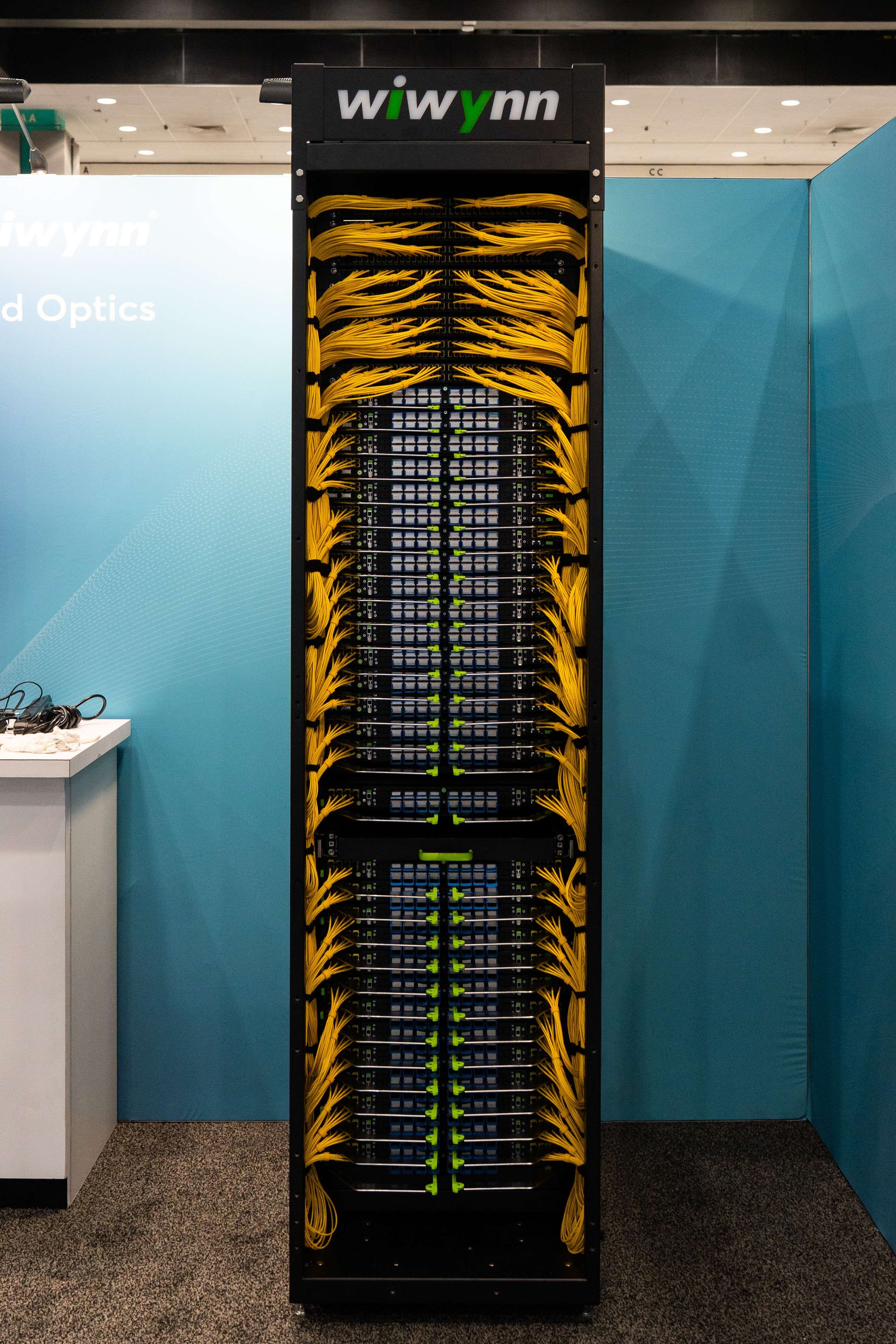
Austin:What did Wiwynn see? 😎
Exciting news for Positron. We’ll try to get them on the podcast in the next few months to dive deeper into the different architectural bets they are making compared to other AI accelerator startups.
Vik: Wiwynn saw this Austin, they saw this filled with Ayar labs photonics.
At computex 2026
Microsoft Targets 38 GW of Data Center Capacity Within Seven Years
Microsoft plans to reach 38 gigawatts of data center capacity by 2032, tripling its current fleet in a build-out Bloomberg describes as treating computing infrastructure like a utility. That scale of expansion sets a durable demand floor for power, cooling, networking hardware, and advanced packaging over the next decade. The commitment is substantial enough to reshape capital allocation across the semiconductor supply chain, from chipmakers to the packaging houses that assemble high-bandwidth memory stacks. Getting to 38 GW means securing land, power contracts, and construction pipelines on a timeline that leaves little room for the permitting delays that have slowed rivals. Seven years is both a long runway and, given grid interconnection queues, a tight one.
Austin: TRIPLING capacity?! Whew. And remember Jensen said Vera Rubin could capture $40B per GW, so if this was 100% Nvidia compute (it won’t be) that’s $1.5T of CapEx spend on compute alone over the next five years.
Vik: Compute infrastructure is a utility, and we consume tokens from it. This is a new way of thinking about it, because financing deals change when you treat datacenters as a utility.
Pentagon Weighs $5B Direct Loan to AI Cloud Startup Fluidstack
The Wall Street Journal first reported that the Pentagon is in active talks to extend a $5 billion loan to Fluidstack, a commercial AI cloud operator that has struggled to access conventional debt markets at the scale its build-out requires. The proposed financing would make the Department of Defense a direct creditor to a private AI infrastructure company, a structure with no clear precedent in U.S. defense spending. Fluidstack recently broke ground on a $4 billion AI data center campus in Cameron County, Texas, a project operating under strict national-security provisions that restrict foreign-owned equipment and personnel access. No final terms have been disclosed, and the talks remain ongoing.
Vik: This money is to shore up the U.S. supply chain and manufacturing capacity for certain data center-related components, rather than funding a new AI facility outright,
OpenAI Eyes Samsung as Second Fab Source Alongside TSMC for Custom Chips
OpenAI is in discussions to manufacture its next-generation custom AI processors at Samsung Foundry, according to reporting by Tom’s Hardware, which frames the potential dual-sourcing arrangement with TSMC as a sign that OpenAI’s wafer volume requirements exceed what any single foundry can handle. OpenAI itself offered a careful non-denial, telling Yonhap News Agency it had “nothing new to announce” on a possible chip collaboration with Samsung. The company already tapped Broadcom to design its first custom AI chip. Adding Samsung as a second fab source would meaningfully boost Samsung Foundry’s advanced-node utilization at a moment when the division has been fighting hard for high-profile customers to close the gap with TSMC.
Vik: Capacity constraints at TSMC will always drive people into the arms of the Intels and Samsungs of the world. Working with two foundries also provides price negotiating power to OpenAI.
Sector Watch
Foundry
TSMC accelerates its A14/1.4nm Taichung fab construction by six months and targets mass production start in 2027, ahead of prior guidance. (아시아경제)
Samsung Foundry and Qualcomm hit a pricing impasse over 2nm manufacturing terms, threatening to stall next Snapdragon flagship’s foundry allocation. (SammyGuru)
Synopsys cuts NPU die area by 22% on Samsung’s 2nm process using AI-assisted physical design, strengthening the node’s commercial case ahead of ramp. (digitimes)
Memory
Phison posts record August revenue, driven by surging AI storage controller demand across enterprise and consumer SSD platforms. (Taiwan News)
Micron will award Taiwan-based employees bonuses worth up to 68 months of pay, the largest retention package in the company’s Taiwan history. (Reuters)
SK Hynix and its labor union agree to split the annual performance bonus equally between cash and stock, replacing the prior cash-heavy formula. (The Elec)
Packaging
Orchem unveils dual TGV plating and wet-adhesion technologies for glass substrates at KPCA 2026, targeting through-glass via metallization for next-gen AI packages. (The Elec)
Kolon Industries completes expansion of its mPPO low-dielectric resin production line, adding capacity for AI chip package substrate materials. (The Elec)
Haesung DS showcases lead-frame, package-substrate and tape-substrate products at KPCA 2026, presenting its full-range semiconductor substrate portfolio to AI packaging buyers. (The Elec)
PCB & Components
TLB debuts next-generation PCBs for SOCAMM and CXL memory interfaces at KPCA 2026, marking its first independent exhibition at the Korea show. (The Elec)
Renesas will raise product prices again from January 2027, citing rising material, energy, and manufacturing costs — its second announced price action within a year. (TrendForce)
ASPEED plans to raise baseboard management controller prices in December, targeting revenue growth as AI server security requirements expand its BMC footprint. (digitimes)
Power
Eaton unveils a grid-to-chip 800 VDC power architecture for AI data centers, eliminating AC-to-DC conversion stages to reduce losses and rack space. (The Elec)
Bloom Energy launches Power Connect, a new installation system claiming over 40% faster fuel cell deployment for data centers, as its order backlog reaches record levels. (Currently.com)
HD Hyundai Heavy Industries commits over 1 trillion won to land-based power generation engines and small modular reactors, targeting AI data center energy supply. (The Elec)
Optics & Networking
Kyocera and Tohoku University develop a process to integrate optical isolators directly onto silicon photonics chips, removing a key hybrid-assembly bottleneck for co-packaged optics. (Business Wire)
Lightera (Furukawa Electric) expands optical fiber manufacturing capacity to meet rising AI infrastructure demand, extending its Japan-based supply build-out. (Telecompaper)
Chinese optical transceiver makers gain a near-term reprieve as the FCC’s final equipment-authorization update stops short of blocking their US market access. (SCMP)
Data Centers
Nscale appoints OpenAI CFO Fidji Simo to its board of directors ahead of a planned IPO, signaling a deepening OpenAI-adjacent capital markets push for the UK’s largest AI datacenter operator. (WSJ)
Blackstone agrees to acquire Flow Control Holdings, a maker of highly engineered liquid-cooling components for data centers, deepening its direct exposure to AI thermal-management infrastructure. (Business Wire)
Core Scientific wins conditional ERCOT approval for up to 1,402 MW at its Texas sites, clearing a critical grid-interconnection step for its AI infrastructure pivot. (Blockspace Media)
Oracle delivering 300k GPUs in a quarter and Microsoft targeting 38 GW makes the financing question almost as interesting as the semiconductor question. At this scale AI infrastructure stops looking like ordinary tech CAPEX and starts behaving like a utility buildout: long-lived assets, power contracts, huge funding needs and physical bottlenecks. I’d watch which suppliers can secure prepayments or take-or-pay contracts, those terms may tell us where the real bargaining power sits.


Thanks for all the hard work, Austin & Vik. I read this daily and find it quite insightful. Great summary and coverage of semi landscapes
Oracle delivering 300k GPUs in a quarter and Microsoft targeting 38 GW makes the financing question almost as interesting as the semiconductor question. At this scale AI infrastructure stops looking like ordinary tech CAPEX and starts behaving like a utility buildout: long-lived assets, power contracts, huge funding needs and physical bottlenecks. I’d watch which suppliers can secure prepayments or take-or-pay contracts, those terms may tell us where the real bargaining power sits.