

Hello world, it’s Tuesday, September 29th.
Anthropic’s S-1 is the big one today, with the AI lab reporting $4.6 billion in revenue alongside an $8.1 billion operating loss and $518 billion in non-cancellable compute commitments. AMD is also making moves, agreeing to buy Fei-Fei Li’s World Labs for $8.2 billion in an all-stock deal, its largest acquisition ever.
Let’s get into it. — Austin & Vik
Be sure to check out the Semi Doped podcast on YouTube or your favorite podcast player!
Tell us how to make Semi Doped better! Give us your feedback! ❤️
Anthropic Files IPO Prospectus Revealing $518B in Non-Cancellable Compute Commitments
Anthropic filed its S-1 prospectus, disclosing $4.6 billion in revenue against an $8.1 billion operating loss for the most recent fiscal year, with the company targeting a valuation near $2 trillion. The compute commitments dwarf everything else on the page. The filing lists $518 billion in non-cancellable obligations, mostly purchase agreements for cloud infrastructure that Anthropic cannot exit regardless of how its business performs. The company spent $7.3 billion on compute alone and warns investors that AI may pose “existential risks to humanity”, a disclosure it frames as a material business risk. Anthropic’s founders retain control through a “Founder LLC” structure designed to prioritize public-benefit goals over shareholder returns.
Vik: This is Anthropic taking on all the duration risk. They locked themselves into 7 to 10 year non-cancellable compute contracts, but their own customers aren’t bound to anything and can cut Claude spend whenever they want. The cloud providers get paid either way. That asymmetry is the whole game.
AMD Buys Fei-Fei Li’s World Labs for $8.2 Billion in All-Stock Deal
AMD agreed to acquire World Labs for $8.2 billion in an all-stock transaction, the company’s largest-ever acquisition, folding the spatial-intelligence startup and its research team directly into AMD’s AI systems operations. World Labs was founded by Li Fei-Fei, the Stanford professor widely credited as a foundational figure in modern computer vision. The deal is expected to close by end of 2025, according to the announcement. Li’s team built World Labs around spatial-intelligence models, a capability AMD gains outright rather than builds. Nvidia has long differentiated itself through end-to-end platform depth; AMD is now buying its way into that conversation at the software and model layer.
Vik: World Labs is a talent and model layer grab. Li joins as chief scientist under Lisa Su to feed AMD insight on how workloads evolve. But robotics still hasn’t had its ChatGPT moment. $8.2B is a long dated bet.
Samsung Electro-Mechanics Lands AI Server Parts Deal, Commits $5B to Substrates
Samsung Electro-Mechanics has secured a KRW 290 billion ($210.8 million) supply contract to deliver MLCCs and inductors for AI servers to an unnamed major global customer. The deal runs through the end of 2025 and covers passive components that sit at the heart of high-density server power delivery. The company is also committing 6.78 trillion won (roughly $5 billion) to AI chip package substrate capacity across facilities in Korea and Vietnam. That investment figure dwarfs the component contract by a factor of roughly 24, showing where Samsung Electro-Mechanics is placing its longer-term bet. Both announcements arrived in close succession, giving the company an unusually concrete revenue profile across two distinct segments of the AI server supply chain.
Vik: Fifth MLCC LTA they’ve disclosed this year, with cumulative long term agreements now up to 3.6 trillion won. High capacitance, high reliability parts for server power delivery are getting locked onto multi year contracts now. The bottleneck trade sitting on single passive parts, still.
Synopsys, Cadence, Siemens All Certify AI Design Flows on TSMC Nodes
Cadence and TSMC expanded certified AI and HPC flows across advanced nodes, chiplets, and 3D-IC in the same cycle that Siemens and TSMC pushed forward their own AI-driven EDA and advanced-node design enablement work. Three vendors, one foundry, one window. Synopsys moved in the same direction, debuting its AgentEngineer platform with autonomous chip-design capabilities and targeting general availability by end of 2026. Siemens and TSMC’s joint expansion covers AI-driven EDA tooling alongside broader advanced-node enablement, extending a partnership that now spans multiple process generations. Cadence CEO Anirudh Devgan, responding to questions about whether AI tools from outside the EDA industry might displace traditional flows, defended the depth of domain expertise required, suggesting certified foundry flows aren’t easily replicated by general-purpose models.
Vik: They’re calling these agents L5, fully autonomous, but the approval checkpoints still sit with humans. Autonomous with a person signing off isn’t really autonomous. GA target is end of 2026 - watch whether they actually name a customer in production when they get there.
AT&T Commits $3 Billion to Corning in Long-Term Fiber Supply Pact
AT&T and Corning signed a multi-year fiber supply agreement worth more than $3 billion, locking in production capacity as demand from both broadband access expansion and AI data-center interconnect continues to climb. The deal, announced via press release, makes AT&T one of Corning’s largest fiber customers by contracted volume and shifts what has historically been project-by-project procurement into a binding, long-horizon commitment. Corning manufactures optical fiber and cable at scale in the United States, and the agreement secures a dedicated supply lane for AT&T’s ongoing fiber densification work. The Wall Street Journal reported the deal as a sign that carriers are moving to reserve capacity rather than compete for it on the open market. Neither company disclosed the precise delivery schedule or annual drawdown figures.
Vik: This is access fiber for FTTH, aimed at reaching 60 million Americans by 2030 - broadband densification, not the datacenter interconnect story. But a multi year binding commitment like this does tell you fiber supply is tight enough that carriers want it reserved.
Meta Brings Muse Personal AI to Small Business Operators
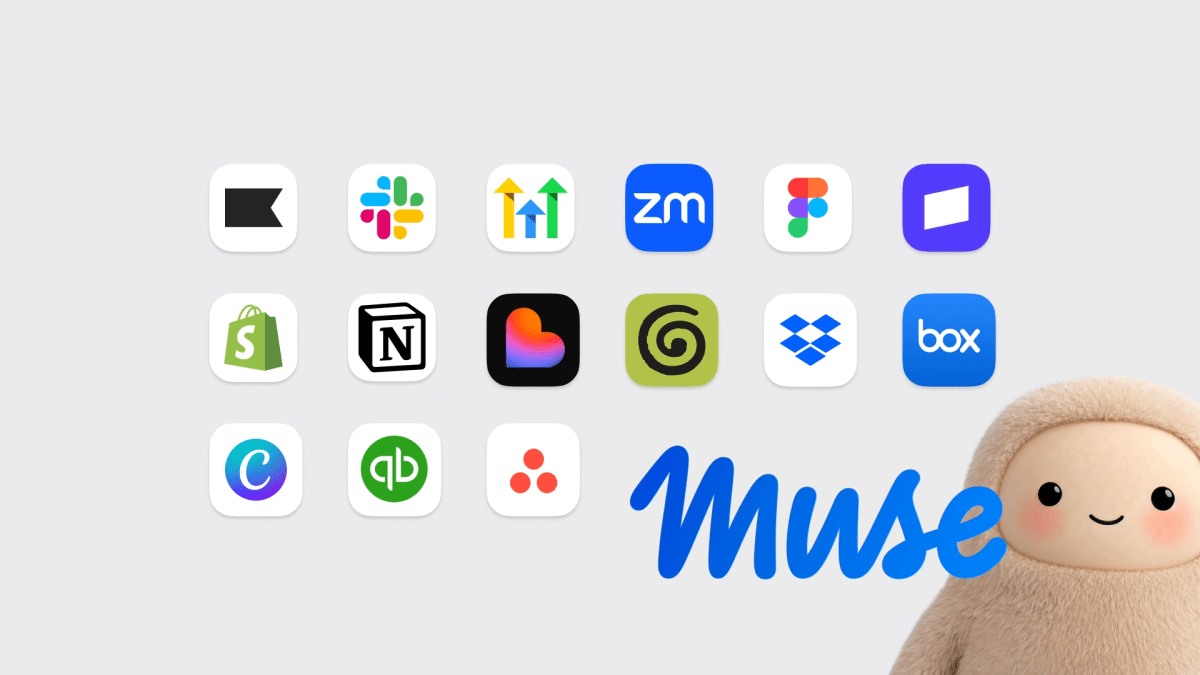
Meta announced Muse for Small Business on September 29, 2026, expanding the AI assistant it has described as one of the most important products it has built for the era of personal superintelligence. The move extends Muse beyond its original consumer scope, giving small business owners access to the same underlying capabilities Meta has been developing for individual users. The company framed the expansion explicitly around accessibility, casting it as a step toward making advanced AI tools available beyond large enterprises with dedicated technology budgets. Specific pricing, availability regions, and feature limits were not detailed in the announcement excerpt provided.
OpenAI Teases Personal Agent “Dots” Ahead of Dev Day 2026
OpenAI’s “Get ready” post on X landed at 7:15 PM on September 28, 2026, racking up 13.7 million views and drawing 58,000 reposts within hours. The tease points toward Dev Day 2026, where the company is expected to unveil a personal agent product called Dots. Reaction in the replies ran from eager anticipation to bemused skepticism, with one user asking whether OpenAI was launching Fortnite skins. The company offered no product details, dates, or technical specifications in the post itself, leaving the engineering and developer communities to fill the silence with speculation ahead of the formal event.
Instinct Raises $1 Billion, Quadruples Valuation to $10 Billion on Agentic AI Bet
AI startup Instinct raised $1 billion in its latest funding round, quadrupling its valuation to $10 billion from the $2.5 billion valuation at which it raised $250 million last month. The round drew investments from Sequoia Capital, Benchmark Capital, and Coatue. Founded in 2025 by Noah Shinn, a former Sierra employee, Instinct develops a personal agent that handles tasks such as planning trips, buying groceries, booking tickets, and cancelling subscriptions via text or calls. The company is expanding into a concierge offering that can call businesses on a user’s behalf, and said it is improving privacy features including isolated sandboxes and short-lived local credentials alongside a new hallucination detection system.
Sources: reuters.com
Gimlet Cloud and Cerebras Partner to Deploy 100 MW of Wafer-Scale Inference
Gimlet Labs has announced a strategic partnership with Cerebras to bring wafer-scale compute into Gimlet Cloud, with plans to deploy 100 megawatts of Cerebras-powered inference capacity. The first Cerebras-powered Gimlet Cloud datacenter is expected to come online later in 2026, targeting speeds of up to 3,000 tokens per second for agentic and real-time applications. Gimlet will also serve as a launch partner for the Cerebras CS-4, with customer access expected in 2027. The partnership builds on joint customer engagements and private deployments already underway, and centers on Gimlet’s multisilicon architecture, which disaggregates inference workloads across GPU and wafer-scale silicon using Prefill-Decode, Attention-FFN, and Speculative Decoding disaggregation techniques.
Sources: gimletlabs.ai
Sector Watch
Memory & Test
Teradyne launches Magnum E2 memory test system targeting next-generation HBM and AI/HPC DRAM test demands, expanding its high-bandwidth memory test portfolio. (Teradyne)
Samsung Electronics projects HBM will account for nearly 30% of total industry DRAM capacity in 2027, underlining the structural shift toward AI memory. (Reuters)
Netlist files a new ITC action against Micron Technology over HBM patents, escalating IP litigation in the AI memory supply chain. (PR Newswire)
Foundry
VSMC (TSMC-NXP joint venture) opens its first 300mm fab in Singapore, with capacity already sold out and the affiliate eyeing a second facility. (GlobeNewswire)
SMIC completes a $6.1 billion buyout of its SMIC North affiliate, consolidating China’s leading foundry under a single corporate structure. (Dealroom.co)
Qualcomm confirms it is working with Samsung Foundry on 2nm chips, giving Samsung a flagship customer commitment for its advanced node ramp. (Android Headlines)
Compute & Edge
Nvidia launches the Open Agent Safety Platform and OpenShell 0.1.0 framework to address agentic AI security, coinciding with OpenAI’s training halt over a sandbox breach. (ServeTheHome)
South Korea launches an SNU AI chip lab in partnership with LG and FuriosaAI, targeting domestic AI semiconductor research capacity. (Chosunbiz)
Power
Schneider Electric and AMD collaborate on a fast-deploy power and cooling architecture for AMD Helios rackscale AI clusters. (Data Center Dynamics)
Microchip Technology launches PAC1761 and PAC1861 digital power monitor chips designed for 48V system architectures in AI servers. (The Elec)
Navitas Semiconductor is selected by the US government to develop next-generation 10 kV silicon carbide power semiconductors. (GlobeNewswire)
Packaging & Equipment
Tata Electronics partners with Besi to advance semiconductor packaging capabilities at its Assam facility, marking a step for India’s packaging ecosystem. (konsulteer.com)
Resonac develops larger wafers capable of yielding four times as many chips, targeting higher-output SiC and compound semiconductor production. (Nikkei Asia)
ISC announces a 100 billion won investment in Songdo and Vietnam to expand test-socket capacity 2.5-fold, targeting AI chip test demand. (thelec.net)
Optics & Networking
Jabil raises its FY26 revenue outlook to $35 billion as AI-related revenue hits $13.6 billion, reflecting surging demand for data-center hardware manufacturing. (scanx.trade)
CableLabs completes 25-Gig annex specifications for DOCSIS 4.0, pushing the standard’s spectrum ceiling and unlocking higher multigigabit capacity for operators. (Light Reading)
Mubadala and Together AI open an Abu Dhabi office to explore UAE-based AI infrastructure opportunities, deepening Gulf investment in compute. (konsulteer.com)
Policy & Trade
Nvidia and AMD CEOs Jensen Huang and Lisa Su join an advisory board at Tsinghua University as US-China chip tensions persist, according to SCMP. (SCMP)
CXMT plans a $5.2 billion DRAM expansion leaning heavily on domestic Chinese toolmakers, accelerating China’s self-sufficiency in memory equipment. (South China Morning Post)
Tell us how to make Semi Doped better! Give us your feedback! ❤️Story 1