Qualcomm signs multi-gen custom AI chip deal with Amazon Samsung leads Mistral AI round at €21B, Arm platform refresh, Google TPU Ironwood beats Nvidia B200 50% on cost per token.
Qualcomm made headlines with a multi-generational custom AI chip deal with Amazon, and Arm dropped its biggest platform refresh in one shot, covering mobile, data center, and a new AGI CPU all at once.
Let’s get into it. — Austin & Vik
Quick hits, high signal. Takes from semi industry experts. Sign up for free daily updates!
Be sure to check out the Semi Doped podcast on YouTube or your favorite podcast player!
Qualcomm Signs Multi-Generational Custom AI Chip Deal With Amazon
Qualcomm announced a multi-generational collaboration with Amazon to design and build custom AI data center chips, a formal push by the smartphone processor giant into hyperscaler silicon. Under the terms, Amazon receives the right to acquire up to $4 billion in Qualcomm shares, a warrant structure that ties AWS’s economics directly to Qualcomm’s execution. The partnership puts Qualcomm in competition with Nvidia and AMD for data center AI workloads while giving AWS another source of custom silicon alongside its own Graviton and Trainium programs. Qualcomm shares jumped roughly 10% on the news. The deal covers multiple chip generations, meaning the design relationship extends well beyond a single product cycle.
Vik: Up until now, all the AI datacenter talk for QCOM was from Humain - the Saudi-backed full stack AI company. A long term collaboration with Amazon is a good sign for Qualcomm, and a vote of confidence that a big market player trusts that they will deliver.
Arm Refreshes Entire Silicon Stack for Agentic AI Across Every Compute Tier
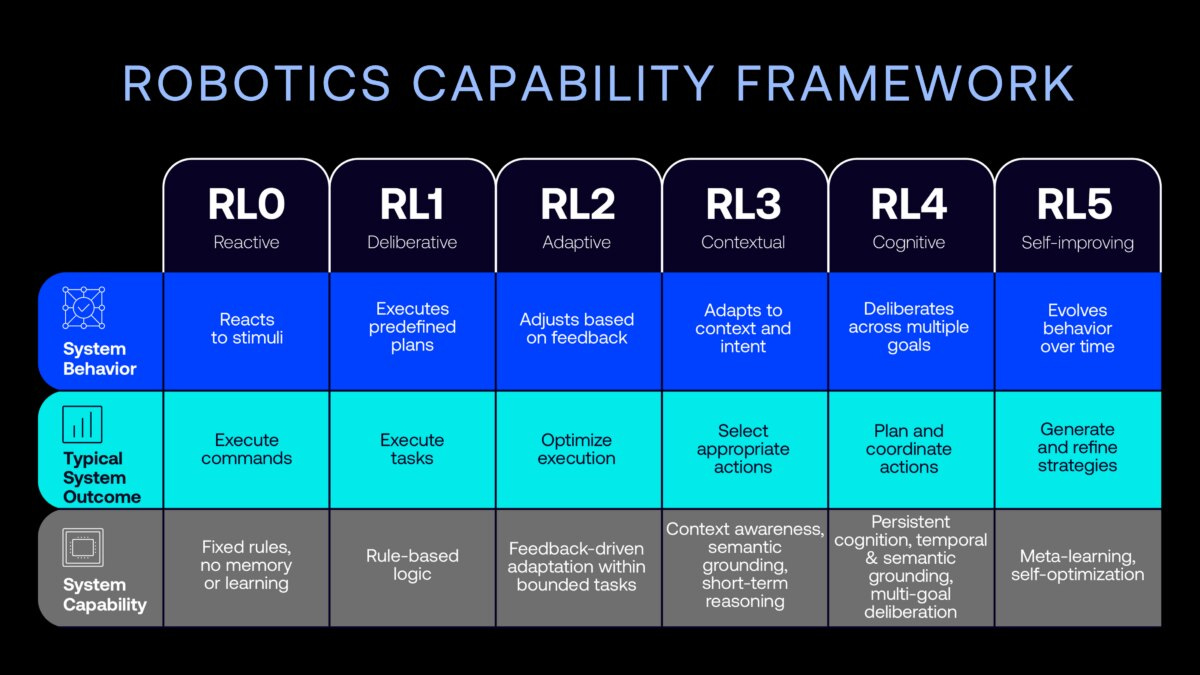
Arm unveiled its most sweeping platform refresh at once, releasing the CSS for Mobile 2 compute platform, the Neoverse CSS N4 for data centers, and a new AGI CPU in a coordinated push to capture agentic AI workloads from smartphone to cloud. CSS for Mobile 2 pairs the new C2-Ultra CPU cluster with the Mali G2-Ultra NX, which Arm calls its most advanced mobile GPU and the first to embed dedicated neural accelerators for on-device inference. Arm Total Design for physical AI now counts more than 80 ecosystem partners and introduces a Robotics Capability Framework to establish common standards for autonomous system development. The accompanying Arm AI Portal connects more than 22 million developers to pre-optimized models and machine-discoverable workflows spanning cloud, edge, and physical AI.
Austin: Good thought leadership from Arm here too, e.g. putting out a robotics capability framework (conceptually analogous to vehicle ADAS/autonomy levels)
Samsung Leads Mistral AI Round, Valuing French Lab at €21 Billion
Mistral AI has closed a new funding round led by Samsung that values the Paris-based frontier model company at €21 billion, or roughly $24 billion, cementing its place as Europe’s most valuable AI lab. The Samsung-led investment ties one of the world’s largest memory and chip manufacturers directly to Mistral’s model development work, giving the Korean conglomerate a stake in European AI infrastructure at a moment when sovereign compute has become a political priority across the continent. Founded in 2023 by former DeepMind and Meta researchers, Mistral has now raised at a valuation that would have seemed implausible for a two-year-old European AI startup just a funding cycle ago. Samsung’s lead role extends its strategy beyond hardware into the software and model layer of the AI stack.
Vik: Like with Nvidia trying to buy HuggingFace, Samsung investing in Mistral is another sign that hardware companies are becoming entrenched in the model layer. As long as the model makers have the money to grow, the demand for hardware will only increase. Win-win.
OpenAI unveiled GPT-6 Astra on September 3, billing it as a major step toward autonomous, multi-step agentic tasks, and the announcement moved chip markets immediately: Micron, SK Hynix, and Intel futures each jumped up to 4% on the HBM demand read-through. Korean memory names caught a particular bid despite lingering HBM supply concerns flagged by analysts. The infrastructure piece landed separately. Nvidia-backed Australian firm Firmus signed a multiyear agreement with OpenAI to supply compute capacity from its Malaysian data centers, extending the AI buildout into Southeast Asian sovereign corridors.
Vik: GPT-6 Astra is an amazing model, and the kind of things it can do only needs more memory. Building 3D models and creating dynamic visual effects, including completely handling your computer, bullish all kinds of memory, not just HBM.
Samsung and Arm Reportedly Co-Developing On-Device Chip for OpenAI
South Korean media have reported that Samsung has begun co-developing an on-device chip with Arm, with OpenAI believed to be the end customer for the resulting silicon. The project would mark a notable convergence of three companies whose individual ambitions in AI hardware have each been well-documented, now apparently funneled into a single design effort. On-device inference chips reduce reliance on cloud compute, and OpenAI has been openly searching for ways to control more of its hardware stack. Samsung brings advanced packaging and fabrication muscle; Arm contributes its architecture. No parties have confirmed the collaboration officially, and the sourcing remains attributed to unnamed South Korean press reports rather than any direct disclosure.
Google TPU Ironwood Beats B200 on Cost Per Token in First Third-Party Test
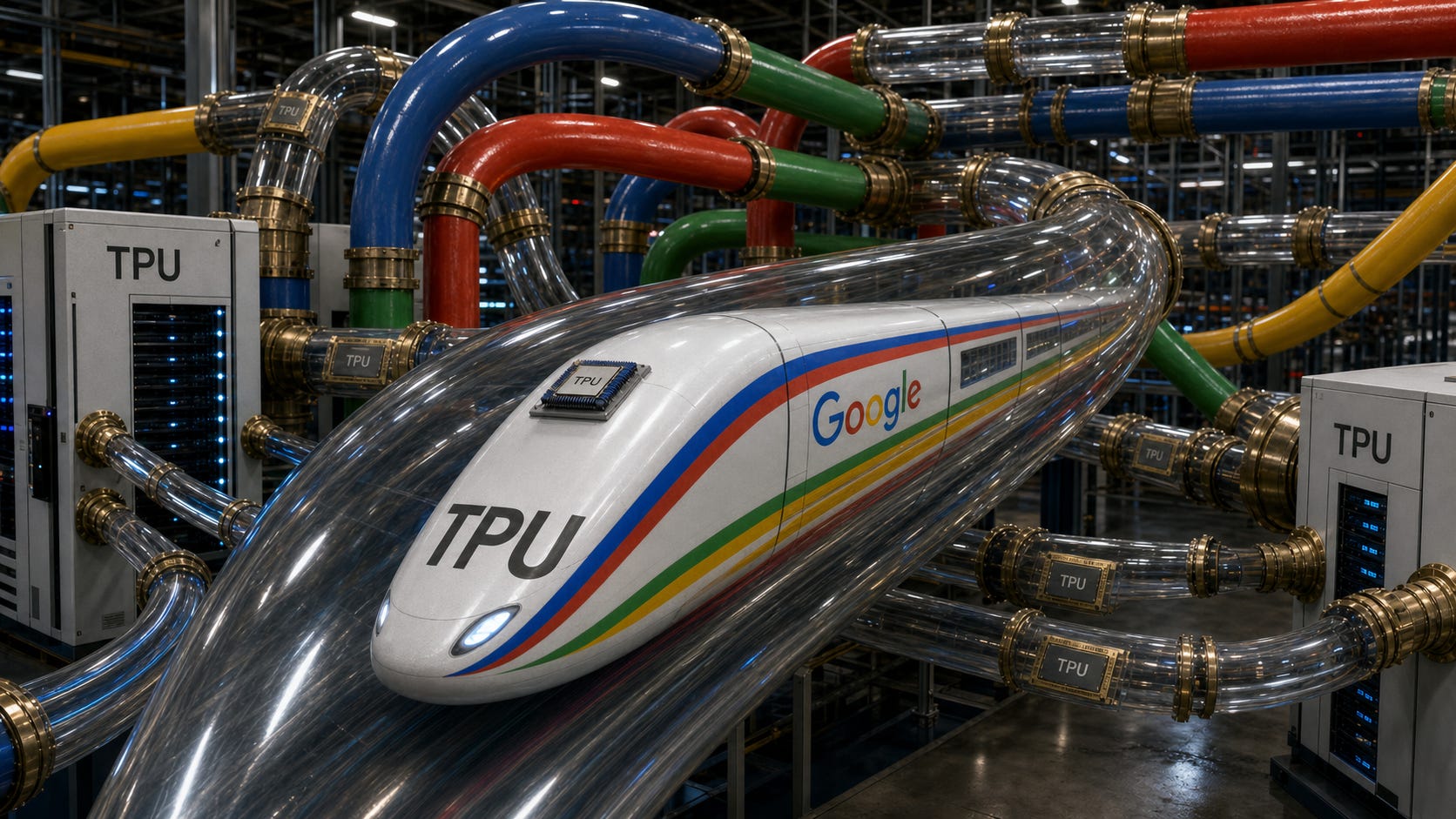
SemiAnalysis published first third-party inference results for Google’s TPUv7 Ironwood on InferenceX Official Preview, finding up to 50% better performance per dollar compared to Nvidia B200 and B300 in apples-to-apples aggregated serving with FP8 and single-token prediction. At an interactivity of 100 tokens per second per user, Ironwood costs approximately $0.181 per million total tokens versus $0.222 for B200 and $0.276 for B300. The new TorchTPU backend, which treats TPUs as native PyTorch devices, is expected to exit private beta and be open-sourced around mid-October 2026 at the PyTorch Conference. Google’s next chip, TPUv8i, will add native FP4 support, which SemiAnalysis believes will make it competitive with Rubin NVL72.
Anthropic Walks Away from $6 Billion Decart AI Acquisition
Anthropic PBC has decided against acquiring AI startup Decart AI after completing due diligence, according to people familiar with the matter. Anthropic had been in talks to buy Decart for about $6 billion, though nothing had been finalized. Decart produces software that can reduce the cost of training and operating AI by helping chips work more efficiently. The two companies may still pursue other collaboration opportunities, one of the people said.
Austin: Well, I mean, hopefully they still exist and everything, but yeah I had high hopes for what Decart could unlock for Anthropic.
Sector Watch
Foundry & Lithography
Samsung Foundry expands its Synopsys EDA partnership to cover all advanced process nodes, deepening design-tool integration across its leading-edge lineup. (Seoul Economic Daily)
TSMC and Taiwan are jointly building a semiconductor-talent pipeline with Saxony to staff the Dresden fab ahead of volume production. (digitimes)
Hanyang ENG wins a 148 billion won piping construction contract for Samsung’s Pyeongtaek P5 fab, the largest active leading-edge fab expansion in Korea. (The Elec)
Memory
CXMT begins mass production of LPDDR6 mobile DRAM at 12,800 Mbps with 16 Gb dies, opening the process to global customers as Apple supply talks surface. (TrendForce)
Apple signs a multi-year, uncapped NAND supply agreement lasting three to five years, with Kioxia cited as the most likely partner. (Kioxia)
Longsys is set to debut on the Hong Kong Stock Exchange following a $903 million listing, marking a notable flash-storage IPO. (Bloomberg.com)
Edge & Compute
MediaTek confirms its 2nm Dimensity 9600 Pro flagship SoC will launch September 15, bringing AI gaming and 4K 120fps video capture. (Gizbot)
Xiaomi unveils the 18 Fold with its in-house Xring O3 chip, scoring 5.2 million on AnTuTu and directly challenging Qualcomm in premium foldables. (SCMP)
Preferred Networks files for an IPO in Japan to fund mass production of its AI chips, signaling rising capital demands for domestic compute. (Bloomberg Tech)
Optics & Networking
Verizon and Corning announce a multi-billion dollar fiber supply partnership explicitly framed around building AI connectivity infrastructure across the US. (Barron’s)
Telstra and Ciena achieve a record 1.6 Tbps transmission over 1,100 km, demonstrating high-capacity optical performance for AI-era Asia-Pacific networks. (Telecompaper)
Nokia launches Mobile Core Early Access, a live hosted environment letting operators test and validate next-generation mobile core software in real time. (Nokia)
Power & Data Centers
Crusoe Energy Systems raises over $3 billion in new funding at a $30 billion post-money valuation to scale AI-optimized data-center power infrastructure. (FinSMEs)
LG Uplus enters the prefabricated modular AI data-center business, developing standardized designs for rapid deployment. (The Elec)
Palantir partners with Nebius to deliver a complete sovereign AI infrastructure stack, combining Palantir software with Nebius GPU compute. (Unite.AI)
Policy & Trade
China imposes anti-dumping measures on a chip chemical imported from Japan, escalating materials-supply tensions in the semiconductor supply chain. (Bloomberg.com)
SEMI urges European policymakers to broaden the proposed Chips Act 2.0 to strengthen supply-chain resilience and boost regional semiconductor competitiveness. (EE News Europe)
Malaysia is actively weighing procurement of Huawei Ascend AI chips for its sovereign AI program despite explicit US warnings over trade-pact risks. (Bloomberg.com)
Packaging & Substrates
Samsung Electronics adopts the same silicon-photonics test-equipment suppliers used by TSMC, aligning its co-packaged optics development platform with the industry standard. (The Elec)
Spirox launches a high-speed through-glass via crack-inspection system targeting high-volume glass-substrate production qualification. (themalaysianreserve.com)
SkyWater Technology launches a Quantum Solutions offering and partners with Qolab for commercial superconducting quantum device wafer services on its new SC250 platform. (SkyWater Technology)




Love your substack!
I always come here first thing in the morning. Great job, Austin & Vik! 😊