

Hello world, it’s Wednesday, September 9th.
ASML locked in formal High-NA EUV commitments from TSMC and Samsung, converting a distant roadmap item into contracted manufacturing infrastructure ahead of a 2030 insertion target. Data center semiconductor revenue jumped 182% year on year in Q2 2026 per Dell’Oro, CoreWeave hit $5B in revenue on the back of Nvidia Blackwell Ultra deployments, and Qualcomm teamed up with Amazon on next-gen AI data center chip development.
Let’s get into it. — Austin & Vik
Be sure to check out the Semi Doped podcast on YouTube or your favorite podcast player!
Tell us how to make Semi Doped better! Give us your feedback! ❤️
ASML, TSMC, Samsung Commit to High-NA EUV and Larger Mask Format
ASML has secured formal commitments from TSMC and Samsung to adopt High-NA EUV lithography alongside a new 12-inch photomask platform, converting what had been a distant roadmap item into contracted manufacturing infrastructure. TSMC is targeting 2030 for High-NA EUV insertion at its A10 or A11 nodes, making it the first confirmed process-generation anchor for the technology. Samsung’s timeline is more aggressive: the two companies have agreed to pursue High-NA EUV in high-volume DRAM production by 2028, which would be an industry first. ASML separately broke ground on expanded manufacturing facilities to meet the anticipated demand. The larger mask format, once widely treated as speculative, now has the three parties aligned behind it as a committed standard.
Vik: This is huge news for the adoption of high-NA EUV! TSMC had been hesitant to adopt high NA EUV due to the extraordinary cost of a single machine ($350-400M). They insisted on pushing low-NA EUV with multi-patterning as much as possible. With the demand for chips exploding, high NA seems the way to go. 12” masks are a massive productivity boost too. Big progress for the chip industry.
Austin: Intel Foundry has a lead here. It’s running layers of Panther Lake in HVM already. TSMC is waiting until much closer to when the 6x12-inch masks are ready
Kioxia CEO Dismisses SK Hynix Production Tie-Up, Vows Price Restraint
Kioxia CEO Nobuhiro Doi publicly rejected any joint production arrangement with SK Hynix, telling Bloomberg the two companies have held no such talks and that he intends to keep NAND prices from rising in ways that would suppress AI infrastructure spending. The denial is pointed: SK Hynix is Kioxia’s largest shareholder, making the arm’s-length posture as much a governance statement as a competitive one. Kioxia’s commitment to price stability, paired with its independence on production decisions, has reinforced its position as the frontrunner for Apple’s long-term NAND supply agreement, according to Digitimes, which describes Apple as shifting toward multiyear memory contracts after years of resisting supplier lock-in. Doi did not specify production volume targets or price ceilings, but his remarks at the Bloomberg interview leave little ambiguity about Kioxia’s strategic direction heading into contract season.
Vik: NAND demand is booming for sure, but nobody wants another memory price hike situation on their hands. High performance NAND will surely occupy an important tier in the AI memory hierarchy.
OpenAI and Samsung Expand Custom Chip Pact as CFO Claims Luna Beats Chinese AI Prices
OpenAI and Samsung have deepened their co-development agreement to build next-generation AI chips, extending a partnership that now spans custom silicon design and enterprise AI deployment. The collaboration involves Samsung’s semiconductor fabrication and packaging capabilities alongside OpenAI’s in-house chip engineering, which reportedly used OpenAI’s own AI models to design its Jalapeno chip. CFO Sarah Friar publicly claimed that Luna, OpenAI’s inference product, undercuts Chinese AI competitors including DeepSeek on price, a direct commercial challenge to open-source alternatives gaining traction globally. The Samsung deal pushes OpenAI further toward owning more of its hardware stack, reducing dependence on third-party compute suppliers as inference costs become a primary competitive battleground.
Vik: You can catch a lot more comments from Sarah Friar at TMT Breakout‘s X post.

Google Commits €13 Billion to Finland AI Build-Out, Signs 22-Year Nuclear Deal
Google is investing at least €13 billion ($15.1 billion) in AI and data-center infrastructure in Finland through 2028, its largest-ever European commitment, anchored by the country’s cold climate and carbon-free power grid. A 22-year nuclear power purchase agreement sits at the center of the plan, making it one of the longest-duration clean-energy contracts any hyperscaler has signed for data-center supply. The deal ties long-term baseload nuclear power directly to site selection, a procurement structure that differs sharply from the shorter renewable PPAs that have dominated hyperscaler energy strategy. Finland’s build-out also includes battery storage capacity. Google’s [separate $5 billion Project Braid joint venture with Blackstone has hit construction delays](# 3), a reminder that capital commitments and shovels in the ground remain two different things.
CoreWeave Claims GB300 NVL72 Lead, Google Tie-Up, $5B Revenue
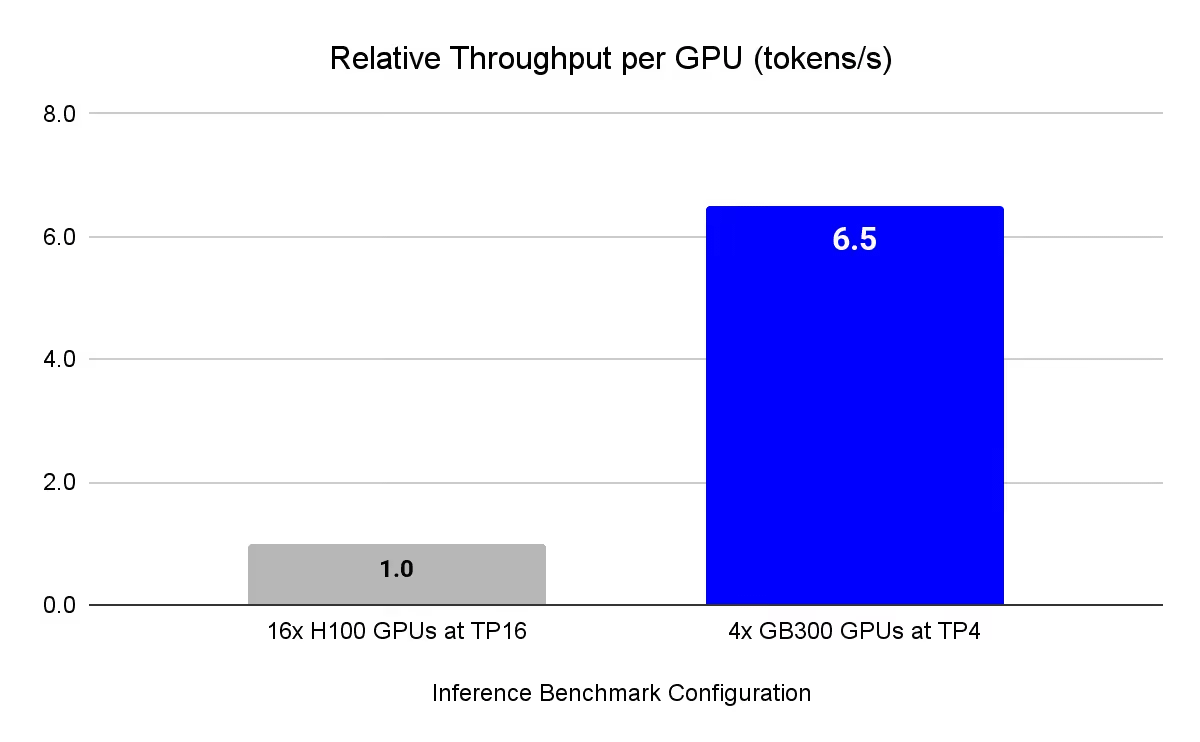
CoreWeave arrived at its first earnings milestone having scaled to $5B in revenue while stacking up a notable run of technical firsts. Its GB300 NVL72 production instances, powered by Nvidia Blackwell Ultra GPUs, deliver 6.5x DeepSeek R1 throughput gains over prior configurations using tensor parallelism at TP4. The company also became the first cloud provider to earn Nvidia’s Exemplar Cloud designation on GB200 Grace Blackwell, surpassing Nvidia’s own training performance targets. It topped the inaugural MLPerf 0.7 Endpoints benchmark for per-GPU DeepSeek-R1 throughput on production GB200 NVL72 hardware. A new CoreWeave Interconnect, built with Google Cloud, adds cross-cloud training and inference via SUNK Anywhere and LOTA Cross-Cloud.
Analog Devices Buys Alif Semiconductor to Push AI Into Sensor Edge
Analog Devices has agreed to acquire Alif Semiconductor, a startup whose Ensemble and Balletto microcontroller families embed AI acceleration directly alongside the processor cores, targeting always-on inference at the sensor edge. The deal extends ADI’s signal-chain franchise into a class of workloads that have historically lived above the microcontroller tier, now being pulled down toward sub-milliwatt silicon. Alif’s Ensemble MCUs pair Arm Cortex-M55 cores with a dedicated Ethos-U55 neural processing unit, letting devices run continuous inference without offloading to a host processor. Alif had been broadening access to its platform with a low-cost StartKit development board for both Ensemble and Balletto devices, a move that grows the ecosystem ADI inherits. Terms of the acquisition were not disclosed.
Vik: This is ADI setting up for a robotics play in the analog space. AI inference right next to the sensor running tiny models that do one thing right is critical as robots learn touch, for example. Even the human body’s nerve endings process touch at the edge, and don’t relay it back to the brain. Same concept here.
Meta Launches Muse Personal AI Agent With Isolated VM and Purchase Protections
Muse is a personal AI agent from Meta that runs on a persistent, isolated Linux virtual machine with its own browser, CPU, storage, and memory. Users interact with the agent through the Muse app or directly in WhatsApp, and can require approval before the agent takes actions such as sending emails or making purchases. For shopping, Muse generates a one-time card number at checkout to keep the user’s real card hidden from merchants, and eligible purchases are covered by Link’s purchase protections. The product also supports app integrations including email, calendar, and Instagram, and can build new tools autonomously when an existing one does not exist.
Sources: muse.ai
Vik: I am a big fan of personal agents and I have been trying a variety of them. Some work great. I can see the usefulness of these in handling mundane tasks of which there are many, in day to day life. Finally, I can intelligently automate away stuff I don’t want to do, and focus on semis :)
Austin: My oldest son read the WSJ print article about Meta Muse this morning and told me to try it and show it to him ASAP. With Meta’s reach, this could be big. Big for cloud CPUs and memory too.
Sector Watch
Foundry & Packaging
Synopsys and Singapore’s A*STAR IME form a joint R&D partnership to accelerate advanced semiconductor packaging simulation and AI-driven design flows. (Bisinfotech)
LG Innotek debuts an AI-grade FC-BGA substrate at KPCA 2026 and targets glass-substrate mass production by 2028, addressing microcrack yield challenges. (thelec.net)
Samsung Electro-Mechanics and LG Innotek stage competing next-generation AI chip substrate showcases at Korea’s KPCA expo, signaling an intensifying domestic advanced-packaging rivalry. (Chosunbiz)
Memory
SK Hynix lays out its business and technology direction at the 2026 Future Forum, framing HBM and AI memory as its primary growth vectors. (SK Hynix)
CXMT accelerates its LPDDR6 talent build-out with R&D headcount reportedly up 60% year-on-year to nearly 78% of SK Hynix’s engineering base, while claiming 10% global DRAM share. (CXMT)
CXMT trails South Korean rivals in HBM3 yields due to limited TSV know-how, even as it presses its LPDDR6 ramp and courts global smartphone customers. (Chosunbiz)
Optics & Networking
OIF releases the 1600ZR coherent interface implementation agreement, doubling capacity per wavelength for data-center interconnects and setting the next optical networking interoperability baseline. (Business Wire)
Semtech sets a new bar for 224G optical connectivity with a freshly announced chipset aimed at next-generation data-center interconnects. (Business Wire)
Meta and Panmnesia publish a CXL architecture proposal in Nature that treats an entire data-center fabric as a single coherent memory domain, extending tight coupling beyond the rack. (thelec.net)
Compute & Edge
Groq unveils the 3 LPX accelerator, purpose-built to speed agentic inference workloads with lower latency than prior-generation LPU silicon. (Jon Peddie Research)
Hancom and FuriosaAI form a partnership to bring NPU-based AI inference to enterprise and public-sector markets in South Korea. (Seoul Economic Daily)
JD Cloud plans a 100,000-GPU AI computing cluster powered by Moore Threads silicon, the largest declared domestic-GPU deployment in China to date. (Global Times)
Policy & Trade
Quantinuum finalizes a $100 million CHIPS Act award from the US Department of Commerce to fund trapped-ion quantum R&D and domestic manufacturing scale-up. (EE News Europe)
Canada’s Semiconductor Council calls on Ottawa to embed semiconductors as an explicit pillar of the national AI strategy, warning the country risks falling behind without dedicated chip policy.
US Treasury Secretary Bessent warns that ceding AI leadership to China would eclipse all other economic priorities, citing Alibaba and DeepSeek model-siphoning allegations as evidence of systemic risk. (Bloomberg.com)
Data Centers
Oracle and HPE expand their networking partnership to deploy Juniper-based fabric across Oracle’s AI data-center build-out, covering switching and routing at scale. (TNGlobal)
Massachusetts will require new data centers to source clean energy, making it one of the first US states to mandate green power for hyperscale infrastructure. (Bloomberg.com)
Nvidia-backed Sievert (Indonesian operator) signs a $3.1 billion GPU loan to fund large-scale AI compute deployment in Indonesia. (Bloomberg.com)
Tell us how to make Semi Doped better! Give us your feedback! ❤️