

Special tribute to Margaret Hamilton died on September 30, 2026, at the age of 90. MIT announced her death on October 7. She led the team that developed the onboard flight software for NASA’s Apollo missions, helping make the first Moon landing possible and establishing software engineering as a discipline.
Margaret Hamilton helped write the software that would guide Apollo astronauts to the Moon. But software was only one part of the problem. The Apollo Guidance Computer also needed thousands of integrated circuits, and in the early 1960s, making enough reliable chips was proving surprisingly difficult.
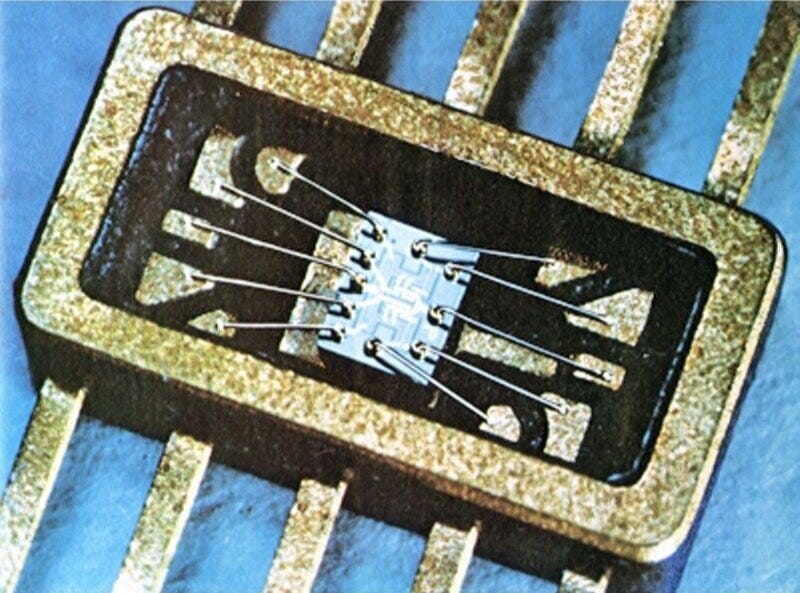
At Fairchild Semiconductor in Mountain View, California, a technician named Ed Porter spotted a possible way forward. Porter was studying for an engineering degree while working at the company, where James “Phil” Ferguson led a team struggling to improve chip manufacturing yields. After a weekend spent reading Semiconductor Magazine, Porter came in with an idea that might solve a problem the team had been wrestling with for years.
The problem was that fewer than one in a hundred integrated circuits was coming out usable. Ferguson, a former Air Force fighter pilot who had joined Fairchild from Texas Instruments in 1960, was trying to work out why. One particularly troublesome step involved heating silicon wafers to around 1,200°C for 24 hours. The process was hard on the silicon crystal and its oxide layer, and after all that effort, most of the chips still failed. At Fairchild Semiconductor in Mountain View, California, Ferguson was trying to fix that problem. He was leading a team developing silicon chips, and the manufacturing yields were dreadful. According to Ferguson’s later oral history, fewer than one in a hundred circuits was coming out usable.
The trouble lay partly in a long, high-temperature manufacturing step. The process involved heating silicon wafers to around 1,200°C for 24 hours. It was meant to create the right structure inside the chip, but the heat was hard on the silicon crystal and the protective oxide layer. After all that work, most of the chips still failed.
Ferguson remembered the mood of the team rather well. “Usually I spent Monday morning trying to remember where the coffee pot was and trying to figure a strategy to get to Friday,” he told the Computer History Museum. Read his oral history interview at the Computer History Museum for more anecdotes with this particular chip.
Then one Monday, Porter walked in asking who else read Semiconductor Magazine.
Porter had spent his weekend reading the magazine and come across an article about a technique called epitaxy, which involved growing a thin crystalline layer of silicon on an existing crystal. He wondered whether it could solve Fairchild’s problem.
Ferguson’s first reaction was curiosity about Porter’s reading habits. As he recalled, he wondered why a “virile young man” would spend his weekend reading about semiconductors. But Porter had spotted something worth investigating: a structure using an epitaxial layer might give Fairchild the electrical properties it needed without the troublesome long, high-temperature diffusion step. It could also use less space on the chip, allowing more circuits to fit on a wafer.
The idea wasn’t Porter’s invention. Epitaxy was already being developed and used in semiconductor work. His contribution was recognizing that a technique described elsewhere might solve the particular manufacturing problem in front of him.
Ferguson and his colleagues made new masks and tried the approach in their research lab. And it worked. The next challenge was convincing the manufacturing engineers, who had to be persuaded that a promising lab result would hold up on the production line.
Eventually, Charles Sporck, a senior Fairchild executive, agreed to a practical test: run wafers made with the old process alongside wafers made with the new epitaxial process and compare the results. The team waited a couple of weeks for the numbers.
Sporck was delighted with the results. Ferguson remembered him exclaiming that the epitaxial process was yielding 50 times as much as the old one. There was one small problem: Sporck had made an error in his mental arithmetic. The actual improvement was 25-fold.
Ferguson didn’t correct him. As he later admitted, the mistake was in his favor, and a 25-fold improvement was plenty.
The new process went into production, and good chips began coming off the line in quantities Fairchild had struggled to achieve before. Sporck went to Tom Bay, who had been complaining about the shortage of integrated circuits, and told him they had 10,000 good chips ready to ship.
Bay’s response was less celebratory than you might expect. After such a long period of poor yields, he worried that customers would struggle to believe Fairchild could suddenly deliver the goods. As Ferguson recalled it, Bay thought the company might have “ruined the market forever” by being unable to supply chips for so long.
For Apollo, this mattered. In 1963, the programme consumed about 60 percent of all integrated-circuit production in the United States. Fairchild shipped the majority of the nearly 200,000 circuits procured for the Apollo Guidance Computer’s early Block I systems, at an average price of $20 to $30 each. The epitaxial process was one important step in making that level of supply possible; it wasn’t the only advance the programme or the industry would need.
Ferguson later felt that Porter never received enough credit. “He was the first guy who realized the power of the concept,” he said.
It’s an unusually cool semiconductor story because it began with a technician reading a trade magazine over the weekend, recognizing a possible connection, and bringing it to the person who could help test it.