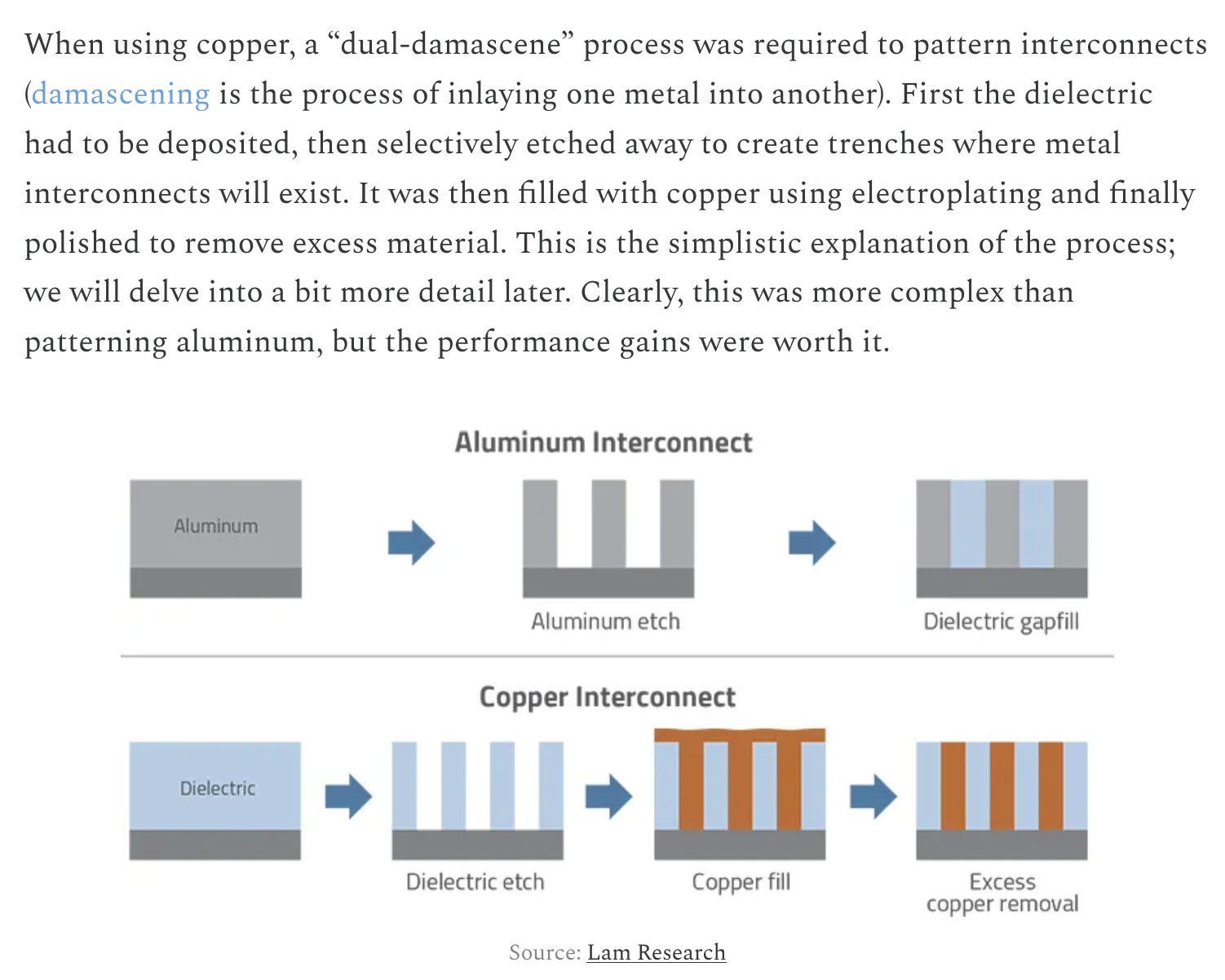
In the ancient Syrian city of Damascus, medieval metalsmiths famously hammered contrasting gold and silver wires into deeply carved grooves on iron or steel to create ornate, swirling patterns on luxury swords and jewelry. Centuries later, this meticulous decorative art form lent its name to a radical manufacturing breakthrough that saved the semiconductor industry from hitting an existential physical wall.
By the late 1990s, microchips were shrinking so fast that the industry’s reliance on traditional aluminum wiring had completely run out of steam. As conduits narrowed, the “electron wind” passing through them physically shoved aluminum atoms out of place, causing catastrophic gaps - a microchip heart attack known as electromigration.
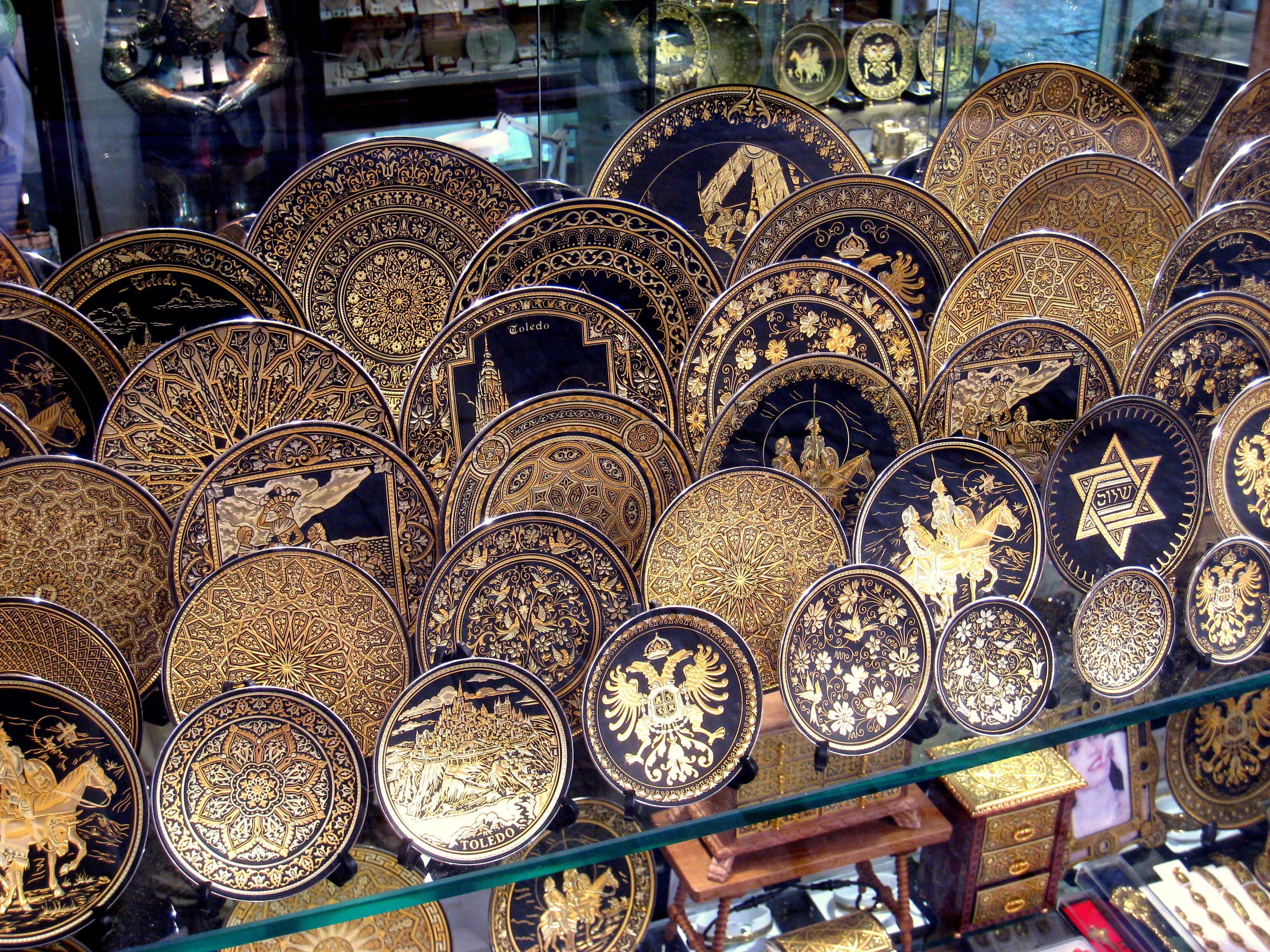
The crisis was solved in 1997 when IBM engineers stopped trying to sculpt the stubborn metal directly. Instead, they reversed the process: they etched trenches into the insulating layer first, overfilled the gaps with the conductive material via an electroplating bath, and polished away the excess to leave perfectly flush, inlaid wires bounded by protective chemical barriers.
Identify both the ancient metal-inlaying art form and the metal.
CLUE:
There is a neat symmetry in the names. The metal takes its own name from an eastern-Mediterranean island where the Romans mined heavily for it, not far from the city that gave the craft its name.
SPOILER ALERT: ANSWER AHEAD
Answer: Copper (takes its name from Cyprus, aes Cyprium, "metal of Cyprus") and the metal in-laying artform is Damascening (dual-Damascene process in the semi world).
Learn more about how this is used in copper interconnects on ViksNewsletter’s post on Ruthenium: The Next Step in Interconnects for Advanced Logic Nodes?: