

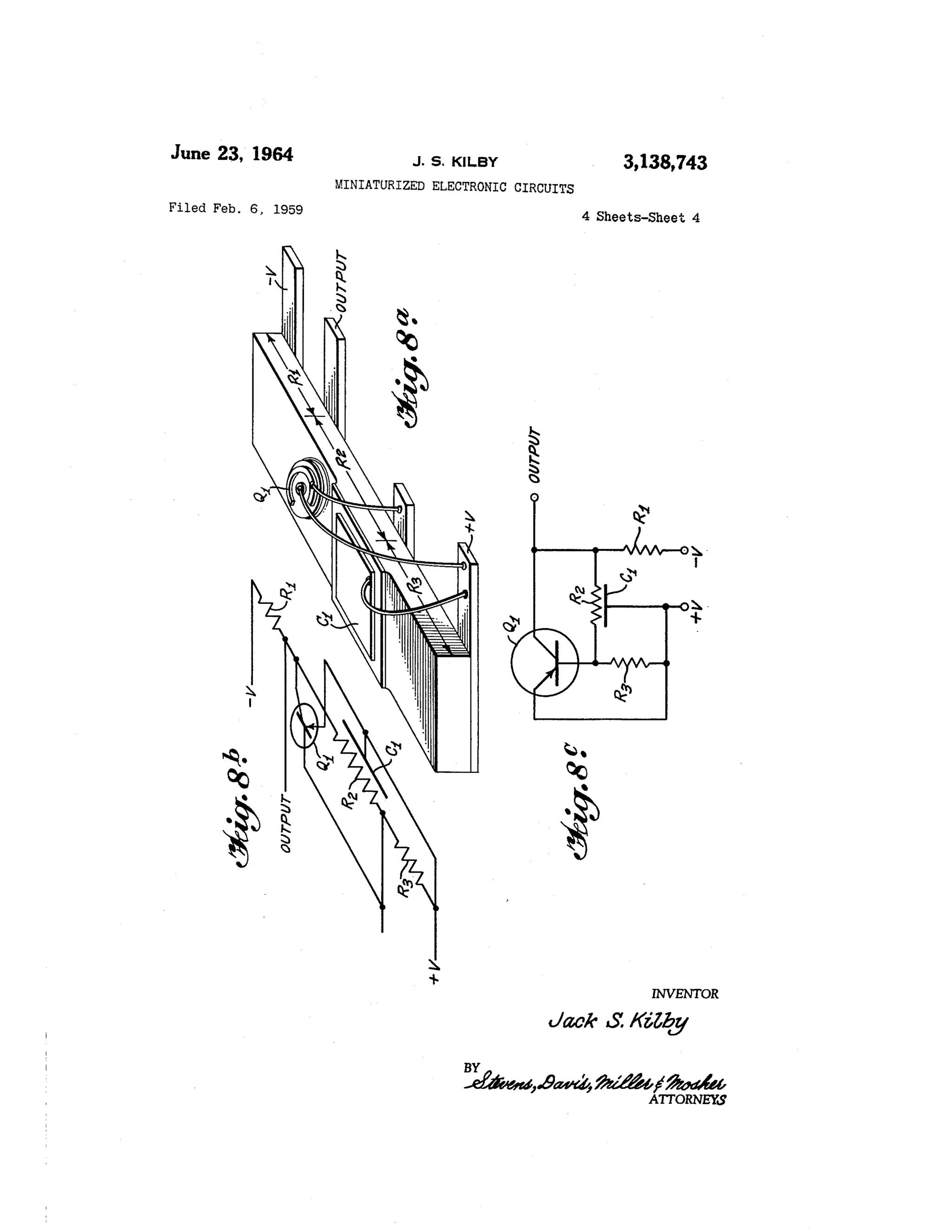
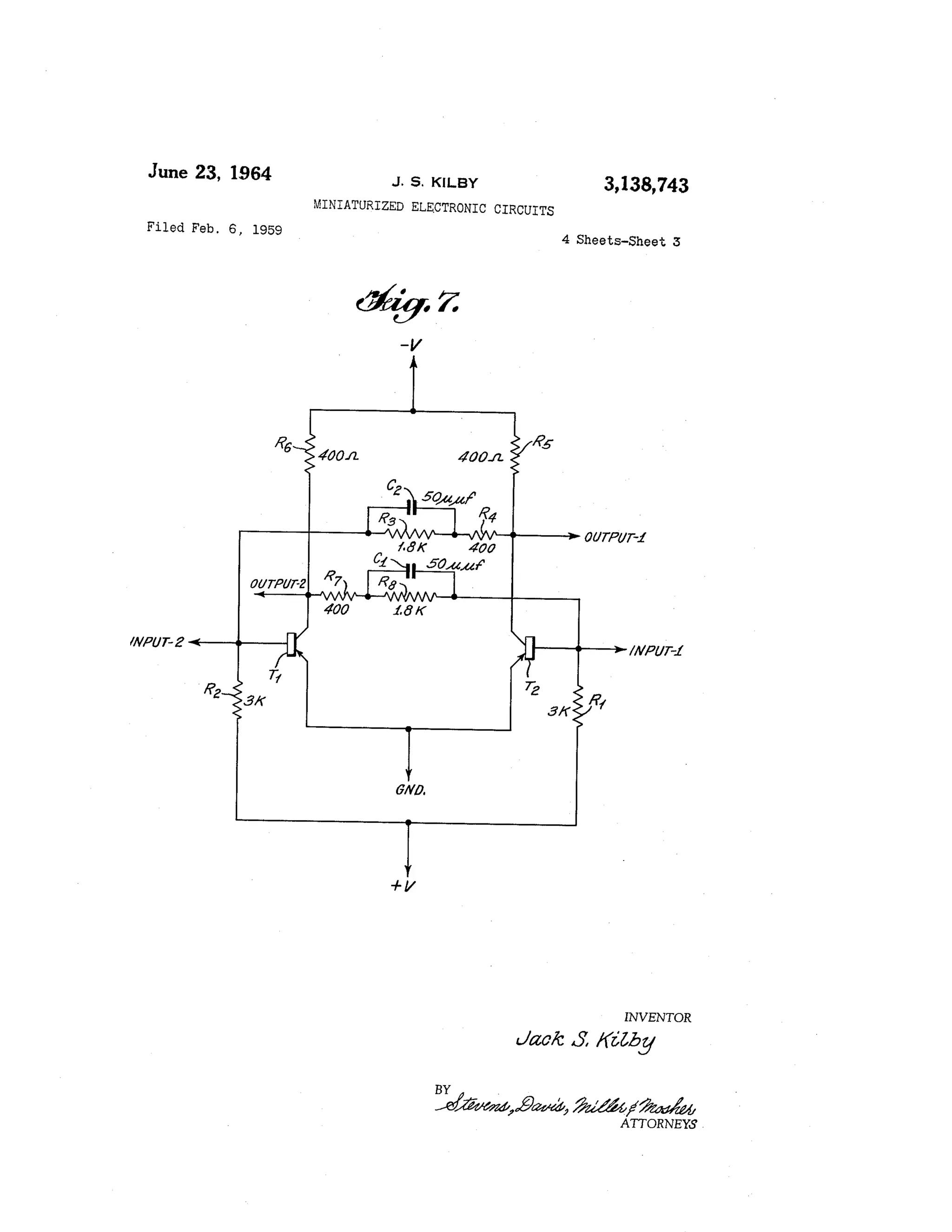
In 1958, a Dallas engineer built a complete circuit on one piece of germanium, then joined its parts with gold wires arching above the surface. Months later, a California rival described flat metal lines that stuck to the chip. In 1969, an appeals court ruled for the Californian on two words: the Texan’s filing said metal could be “laid down” on an insulating layer, which the judges held did not necessarily mean it would adhere.
Both men were describing X. Today a fingernail-sized chip carries tens of miles of it. In 2019, the leading AI chipmaker agreed to pay $6.9 billion for a company selling X between computers.
X is a plural noun. Read as a verb, it is what X does to these stories.
Question: What is X?
CLUES
The Texan was Jack Kilby of Texas Instruments; the Californian was Robert Noyce of Fairchild. Kilby’s own 1976 account says Noyce won for being first to teach how to apply X so that it adhered to the oxide.
The 2019 deal was Nvidia and Mellanox. Nvidia’s 2024 rack, the GB200 NVL72, holds about 5,000 copper cables of X totaling two miles, chosen over optics to save a stated 20 kilowatts.
Thirteen letters. A Latin prefix meaning “between,” then a verb meaning “joins.” In a fab it means the metal layers stacked above the transistors; in a data center it means the copper and optical cables between chips.
SPOILER ALERT: ANSWER BELOW
Answer: Interconnects.
Kilby integrated the components but left the interconnects as flying gold wires; Noyce made them part of the chip. In Noyce v. Kilby (1969), the appeals court ruled for Noyce. Kilby's filing said metal could be "laid down" on the insulating layer; the court held that this did not necessarily mean the metal would stick to it. Expert witnesses for both sides had testified the same. The same word now covers tens of miles of wiring on one chip and the links between computers that Nvidia bought with Mellanox.