

In the spring of 1918, a U.S. Army Signal Corps captain stationed in Paris was given a wartime problem: find a way to detect German shortwave transmissions that existing receivers couldn't tune into reliably. He later said the solution came to him while walking home from watching an air raid, mixing an incoming signal with a second frequency to produce a lower, easier-to-amplify difference frequency.
He filed the patent from Paris in 1919. That wartime circuit, built for military eavesdropping rather than entertainment, is now the basic architecture inside nearly every AM/FM radio, TV tuner, and the RF front end of a smartphone.
Who was this officer?
CLUES
That wartime circuit is now called the superheterodyne, and it's the basic architecture inside nearly every AM/FM radio, TV tuner, and the RF front end of a smartphone.
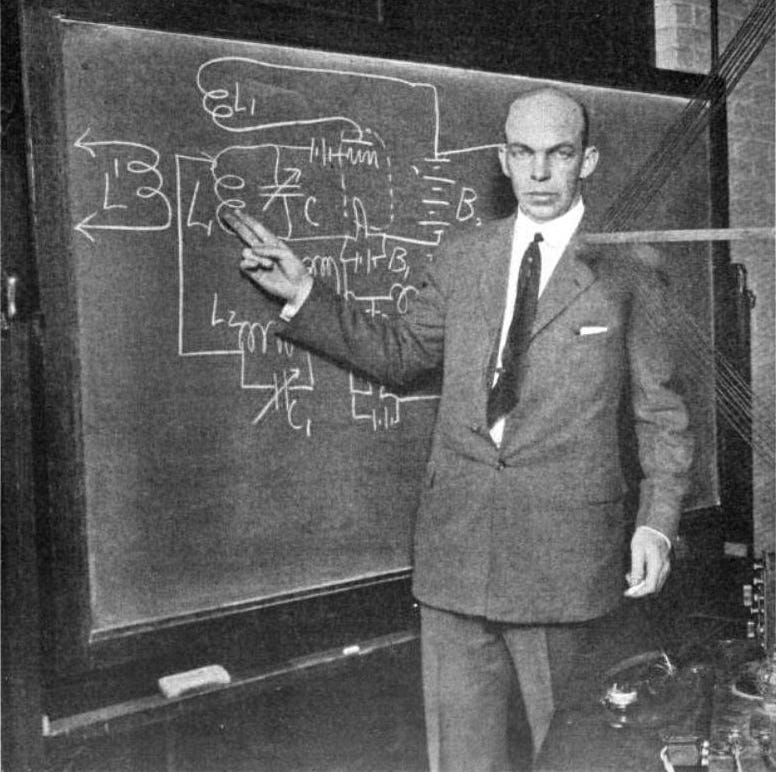
That wartime fix is why your car radio can pull in a station from three counties away, and why your phone's radio chip works at all.
SPOILER ALERT: ANSWER BELOW