

In August 1976, Popular Electronics showed readers how to build a computer for about $80. The machine had 256 bytes of memory, a row of toggle switches for entering instructions, and a two-character display that showed hexadecimal numbers. There was no keyboard, no conventional screen and no operating system waiting to make life easier. If you wanted the computer to do something, you had to tell it exactly what to do, one byte at a time.
At the heart of this modest contraption was RCA’s CDP1802, an eight-bit microprocessor that could execute roughly 100,000 instructions per second. By the standards of the day, it was hardly a speed demon. Its five-microsecond machine cycle and the fact that an instruction typically required two cycles made it considerably slower than some competing designs. The chip’s appeal was that it consumed very little power and tolerated a wide range of supply voltages.
So why did a slow chip meant for hobbyists end up running a spacecraft to Jupiter?
The answer begins with an engineer who thought computers should be things people could experiment with, rather than mysterious machines sealed inside expensive boxes. It also helped that the chip, in a specially manufactured version, could withstand the radiation that makes electronics in space an unusually difficult engineering problem.
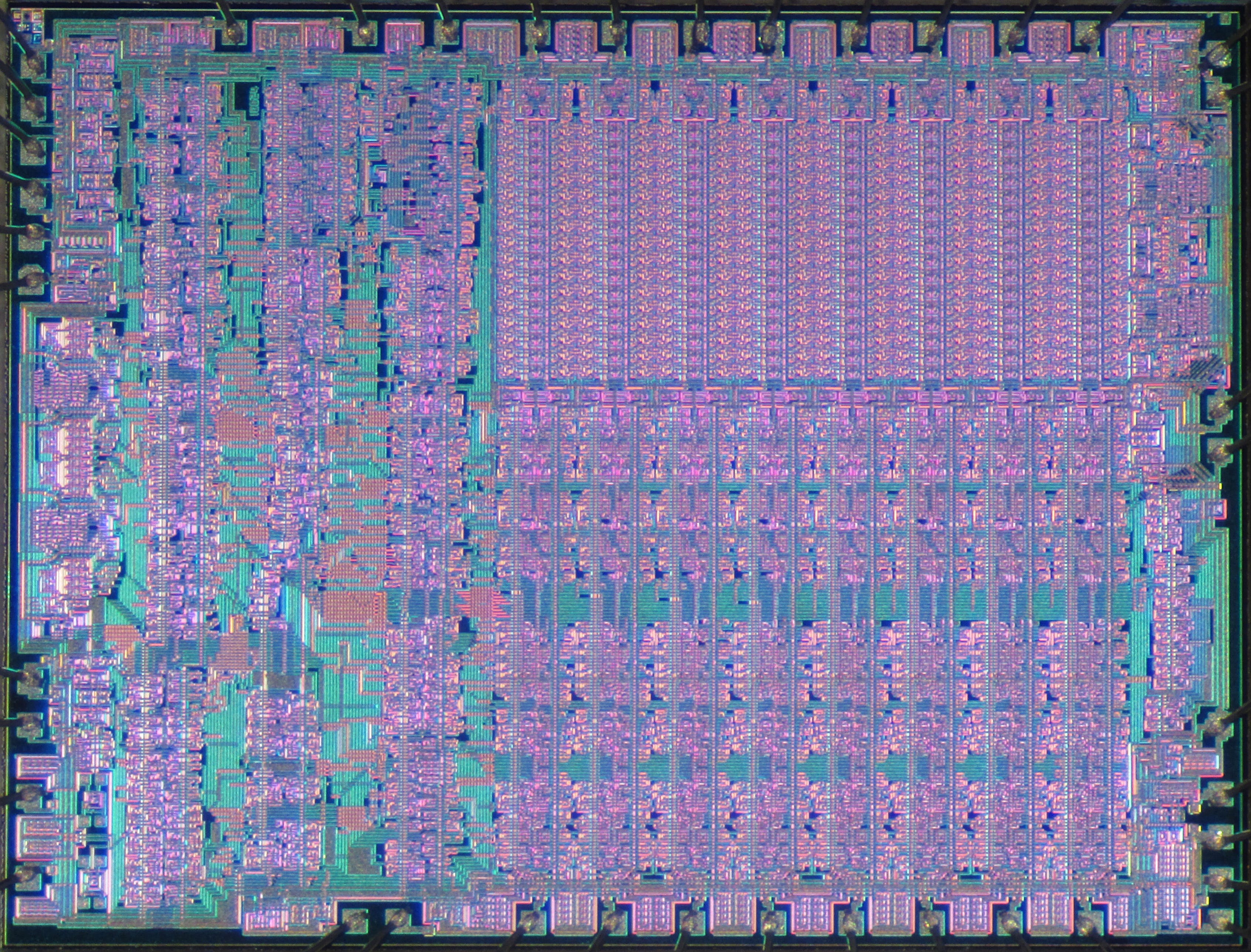
Joseph Weisbecker worked at RCA, where he began developing a small computer system in the early 1970s. He built an early processor prototype from roughly 100 separate logic chips and tried it out with his children, using their experiments to explore how an inexpensive computer might work as a recreational and educational device. He called the concept FRED, short for Flexible Recreational and Educational Device. The name sounds like something a toy company might invent today, but Weisbecker was serious about the idea behind it: people should be able to learn about computing by using and changing the machine themselves.
By 1976, the technology had made the leap from a collection of components to a single-chip processor. Weisbecker introduced the COSMAC Elf in Popular Electronics, giving hobbyists a practical way to build a computer around the CDP1802. The Elf was expandable, and readers could add memory, graphics and other features as their skills and budgets allowed. It was not going to compete with a modern personal computer, but that was rather the point. The Elf made computing tangible, right down to the switches used to enter a program.
RCA tried to turn the same technology into a consumer product. Its Studio II, a home video-game console, arrived in January 1977 with simple black-and-white graphics and games stored on cartridges. The Atari VCS appeared that year too, bringing colour graphics and a much more ambitious gaming experience. RCA’s console struggled to stand out in a market that was moving quickly, and the Studio II became a footnote in the history of home gaming. But we digress.
The CDP1802, however, had a different future ahead of it.
When NASA and the Jet Propulsion Laboratory were planning the Galileo mission, they needed a computer system that could control the spacecraft and manage its data without consuming too much power. Deep space offered little room for repairs, and electronics had to keep working amid radiation that could disrupt or damage ordinary components. NASA was choosing a processor that could survive the journey to Jupiter and keep doing its job.
The 1802 was not an obvious favorite. And NASA’s own history of spaceflight computing describes it as “nobody’s favorite choice,” noting both its slow execution and its low power requirements. Yet the chip’s CMOS design was attractive, and RCA offered versions manufactured using silicon-on-sapphire technology, which improved their resistance to radiation-related problems. A design that looked unremarkable in a consumer electronics showroom could make considerably more sense when the alternative was a computer that might fail hundreds of millions of kilometers from Earth.
Galileo’s command and data system used six 1802 processors arranged in a distributed, redundant architecture. Three processors occupied each of two hardware sections, while the system’s software made the collection behave, from the user’s point of view, like a single computer. The processors handled the spacecraft’s command and data functions, with specialized hardware and carefully designed software helping compensate for the limitations of the chips themselves. It was an intricate solution, and one that required engineers to think as much about reliability and coordination as raw processing speed.
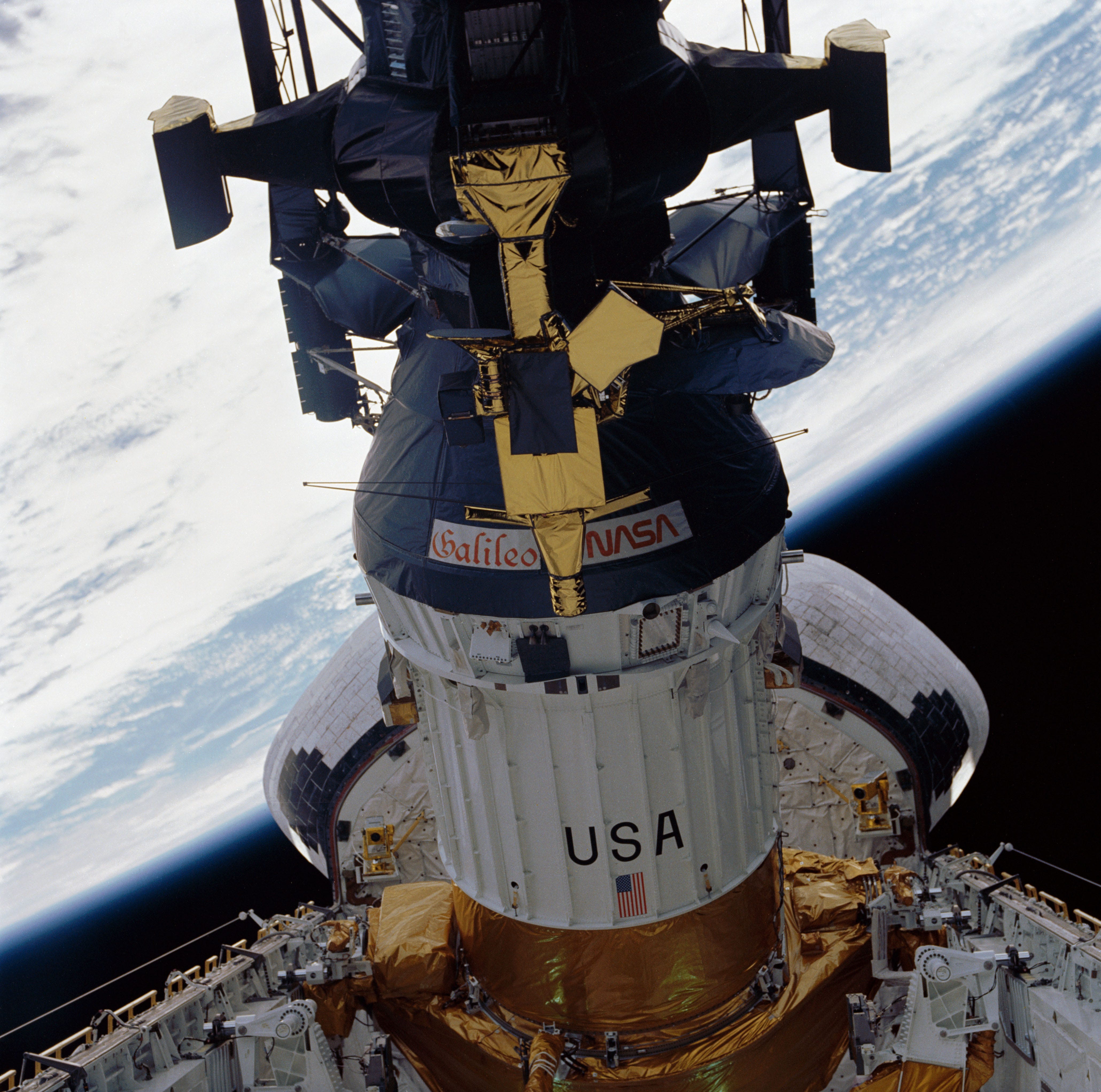
Galileo launched aboard the Space Shuttle Atlantis on 18 October 1989. After a circuitous journey involving gravity assists at Venus and Earth, it reached Jupiter in December 1995. The spacecraft studied the planet and its moons for years, sending back evidence that reshaped scientists’ understanding of the Jovian system, including the possibility of a saltwater ocean beneath Europa’s icy crust. Its mission ended on 21 September 2003, when controllers deliberately sent it into Jupiter’s atmosphere to prevent the spacecraft from accidentally contaminating Europa.
Sadly, Joseph Weisbecker had died in 1990, before Galileo reached its destination. He did not live to see the small processor he helped develop become part of a machine exploring the outer Solar System.
The CDP1802’s story is a useful reminder that a chip’s significance is not always measured by how quickly it can perform a calculation. The Elf made the processor accessible to people who wanted to learn by building; Galileo used specialized versions of the same family of chips in a system designed to endure the hazards of deep space. Those applications seem worlds apart, but both depended on the same qualities — modest power requirements, flexibility and a design that could be made to serve a larger purpose.
The computer that hobbyists programmed with toggle switches was never going to be the fastest machine around. It turned out that speed was not the only measure that mattered.